
⚙️ Footwear Injection Molding: Technical Overview & Global Insights
According to the World Footwear Yearbook published by APICCAPS (the Portuguese Footwear Association), global footwear production reached approximately 24.6 billion pairs in 2025, with Asian factories accounting for roughly 88% of total global output.
Managing manufacturing at this magnitude requires strict operational control. Shoe brands and sourcing teams cannot achieve commercial viability by relying exclusively on manual, multi-step lasting and gluing lines.
🏭The Automation Imperative in Industrial Footwear
Industrial footwear manufacturing requires automated systems that produce identical, dimensionally precise components with predictable cycle times and controlled unit costs. Understanding what injection molding is and how it functions on the factory floor is essential for footwear procurement managers, product developers, and sourcing directors.
The chosen manufacturing methodology directly determines tooling development budgets, minimum order quantities (MOQs), unit prices, and long-term product durability.
📊Global Footwear Production Benchmarks & Parameters
This technical guide examines the machinery, material formulations, cost structures, and quality control protocols involved in footwear injection molding.
⚙️ What Is Injection Molding?
In industrial footwear manufacturing, Building directly on the core injection molding definition, it is an automated manufacturing process in which raw thermoplastic pellets, elastomeric compounds, or reactive liquid polymers are heated into a fluid state and forced under high pressure into a closed, temperature-controlled metal mold cavity. The molten material fills the precise contours of the cavity, solidifies through thermal cooling or chemical curing, and is ejected as a finished three-dimensional component.
Cycle Stages: Polymer Heating → High-Pressure Injection → Cavity Filling → Solidification (Thermal/Chemical) → Automated Ejection.
👟Applications in Footwear Production
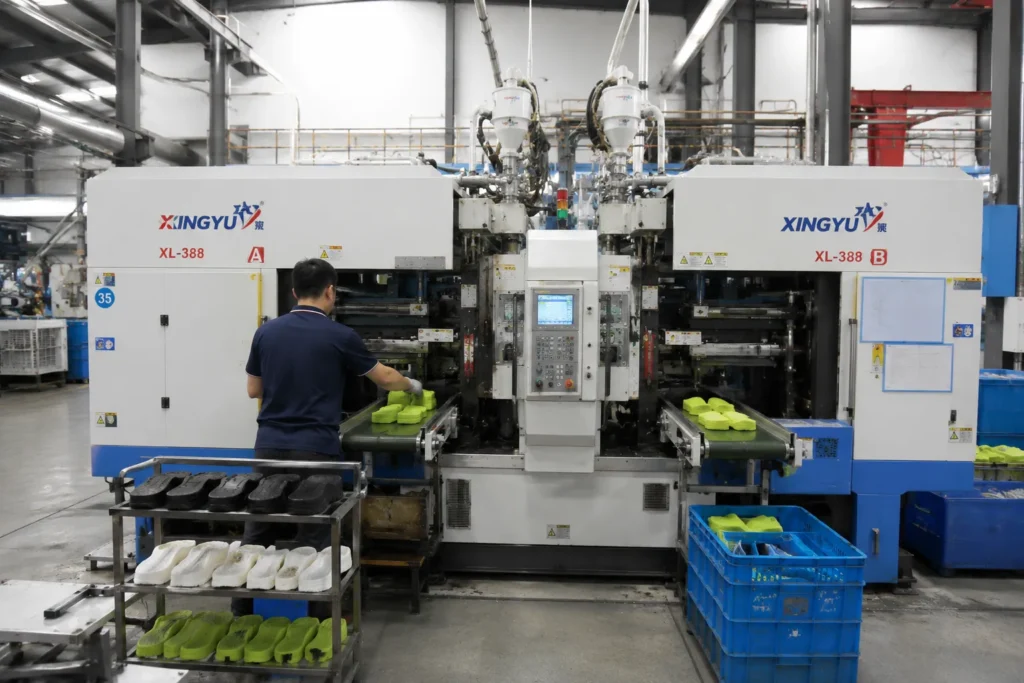
In shoe manufacturing, injection molding is utilized to produce unit outsoles, ergonomic midsoles, protective toe caps, heel counters, or complete monolithic footwear (such as water-resistant clogs or safety boots).
📊Process Comparison: Injection Molding vs. Cut-and-Sew
Unlike conventional cut-and-sew stock fitting—where EVA foam sheets are compression-molded, die-cut, stacked, and manually cemented—injection molding converts raw polymer resin into a complex 3D footwear component in a single machine cycle.
⚡ What Are the Advantages of Injection Molding for Footwear?
Implementing an injection-molded sole or direct-injected shoe construction offers specific mechanical and economic benefits of injection molding compared to traditional manual assembly lines.
🎯Key Operational & Technical Advantages
📐Consistent Dimensions and Repeatability
CNC-machined aluminum and steel molds ensure that unit dimensions remain consistent from the first production pair to the end of a multi-thousand-pair run. Because the molten polymer fills a rigid metal cavity under controlled hydraulic or pneumatic pressure, dimensional tolerances are maintained within fractions of a millimeter. For sourcing managers, this dimensional stability minimizes fitting variances between the lasted upper and the outsole during lasting.
🚀Efficient High-Volume Production
Injection molding provides the speed required for high volume manufacturing. Rotary injection setups equipped with 12 to 24 mold stations allow a single operator team to yield thousands of soles or complete pairs per 24-hour operational shift. Cycle times range from 30 to 90 seconds per station, significantly reducing direct manual labor costs compared to hand-assembled cementing lines.
🎨Complex Sole Geometry and Tread Design
Liquid polymers injected under high pressure flow smoothly into narrow mold channels and intricate cavity details. Designers can incorporate aggressive multi-directional lugs, flex channels, perimeter logos, and textured sidewalls into a single mold setup without requiring post-mold carving or secondary die-cutting.
Because the tread geometry is defined entirely by the mold cavity, deep lugs and perimeter features are reproduced consistently across production batches. How well a given tread pattern resists cracking under repeated bending can be evaluated in a standardized way—according to ISO 17707, outsole flex resistance is tested specifically to assess how sole materials and surface patterns affect cut growth. This standard provides buyers with an objective mechanical benchmark for evaluating sole longevity before committing to commercial production.
ISO 17707 Compliance: Standardized flex-resistance testing measures cut growth and crack propagation across intricate tread geometries, enabling objective mechanical validation prior to tooling sign-off.
🧪Multi-Density and Multi-Material Options
Multi-shot injection machinery allows factories to inject two or three distinct compounds—or different density formulations of the same resin—into a single mold cavity within the same process cycle. A shoe design can combine a low-density, soft EVA midsole core for impact absorption with a dense, wear-resistant TPU tread shell for traction, eliminating the need for intermediate adhesive layers.
🔗Reduced Secondary Assembly With Direct Injection
Direct injection bonding completely eliminates manual adhesive application by casting the molten sole directly onto the lasted upper material inside the mold cavity. This process eliminates solvent-based primers, adhesives, and heat-curing tunnels from the assembly floor, reducing factory VOC emissions and labor overhead.
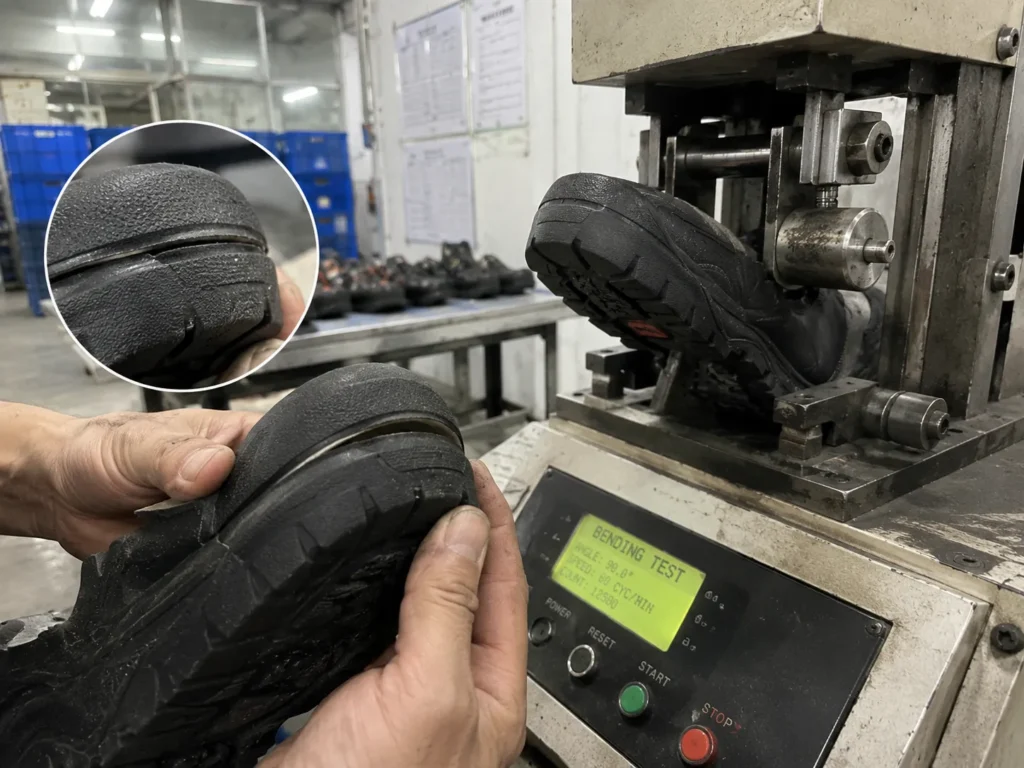
In our own production, the hardest part of direct injection was never forming the sole — it was the bond between the sole and the upper. Early on, we ran a batch of TPU-soled work shoes where the soles looked perfect but began peeling at the toe during flex checks. When we traced it back on the line, the cause was that the upper’s lasting surface hadn’t been roughened and primed consistently before injection, so the molten TPU wasn’t keying into the material. We fixed it internally by adding a fixed roughening-and-primer step with a checkpoint before each upper enters the mold, and by tightening the injection temperature window on the machine. After that change, peel failures on that model dropped close to zero in our own testing. It’s the reason we now treat surface preparation — not the injection itself — as the real control point for direct-injected footwear.
⚠️ What Are the Limitations of Footwear Injection Molding?
While injection molding offers operational efficiency at scale, production planning must account for specific technical and financial disadvantages of injection molding.
🛠️Key Investment & Technical Constraints
💰Mold Development Cost
The primary entry barrier for new footwear projects is the shoe mold price. A complete footwear size scale requires an individual metal mold set for every full and half size across men’s, women’s, or kids’ lines. A single precision steel or aluminum mold set (comprising sole plates, side rings, and top cores) costs between $1,500 and $8,000 depending on cavity complexity and multi-color shot configurations. A standard 10-size grading scale can represent an upfront tooling investment of $20,000 to $60,000 before commercial production begins.
⏳Tooling Lead Time
Designing and fabricating metal molds requires 3D CAD modeling, CAM programming, CNC block milling, EDM spark erosion, and surface texturing. Tooling lead times typically range from 4 to 8 weeks. Mid-season design changes or corrective tooling modifications can disrupt release schedules.
📦Minimum Economical Production Volume
Due to machine purge requirements, barrel temperature balancing, hydraulic clamping calibration, and material changeover setup times, running small orders on an injection line is inefficient. Factories typically set minimum order quantities (MOQs) of 5,00 to 3,000 pairs per colorway and size run to absorb setup scrap and machine calibration costs.
🔒Design Change Limitations
Once a steel or aluminum mold cavity is machined, modifying its primary geometry is difficult and costly. While small amounts of metal can be removed via secondary milling to expand a cavity feature, adding metal back to correct a structural mistake requires laser welding or replacing the affected mold plate entirely.
⚙️Material and Equipment Compatibility
Injection machines and screw barrels must be matched to specific polymer classes. Thermoplastic resins like TPU, TPR, and PVC rely on thermal melt processing and physical cooling. In contrast, thermosetting polyurethane (PU) requires reactive chemical metering and mixing units, and supercritical EVA foam systems require specialized high-pressure expansion machinery and specialized exhaust infrastructure.
📊Strategic Trade-off Analysis: Advantages vs. Limitations
⚙️ How Does Shoe Injection Molding Work?
Quality control management during production audits requires an understanding of the individual stages within the injection shoe manufacturing process.
🔄Step-by-Step Manufacturing Workflow
1️⃣1. Material Preparation
Raw plastic pellets (EVA, TPU, TPR, or PVC) are loaded into machine hoppers. Hygroscopic materials such as TPU require dehumidifying drying at 80°C to 100°C for 2 to 4 hours prior to processing. Moisture in the raw resin causes steam voids, splay marks, and structural weakening in the molded part. Chemical blowing agents, pigments, and UV stabilizers are blended during this stage.
2️⃣2. Heating and Plasticization
Pellets feed from the hopper into a heated machine barrel containing a rotating reciprocating screw. Resistance heater bands gradually melt the plastic as the rotating screw drives the resin forward. Frictional shear heat generated by screw rotation converts the solid granules into a homogeneous, degassed molten melt within a temperature window of 160°C to 220°C, depending on the polymer compound.
3️⃣3. Material Injection
The clamping unit applies hydraulic or toggle pressure (typically 100 to 500 tons of clamp force) to lock the mold halves shut. The reciprocating screw moves forward hydraulically like a plunger, injecting a metered shot volume of molten resin through the runner system and gate channels into the sealed mold cavity under high pressure.
4️⃣4. Mold Filling and Forming
The pressurized melt flows through the cavity, filling tread details, sidewall textures, and internal support structures. Packing pressure is maintained briefly after initial filling to force additional melt into the cavity, compensating for volumetric thermal shrinkage as the outer resin layers begin to cool against the metal mold walls.
5️⃣5. Cooling or Curing
For thermoplastics (TPU, TPR, PVC), chilled fluid circulating through internal mold channels extracts heat from the part until it reaches structural rigidity. For thermoset compounds (reactive PU) or crosslinked polymers (foamed EVA), internal mold heating triggers chemical polymerization or vulcanization until the resin cures completely.
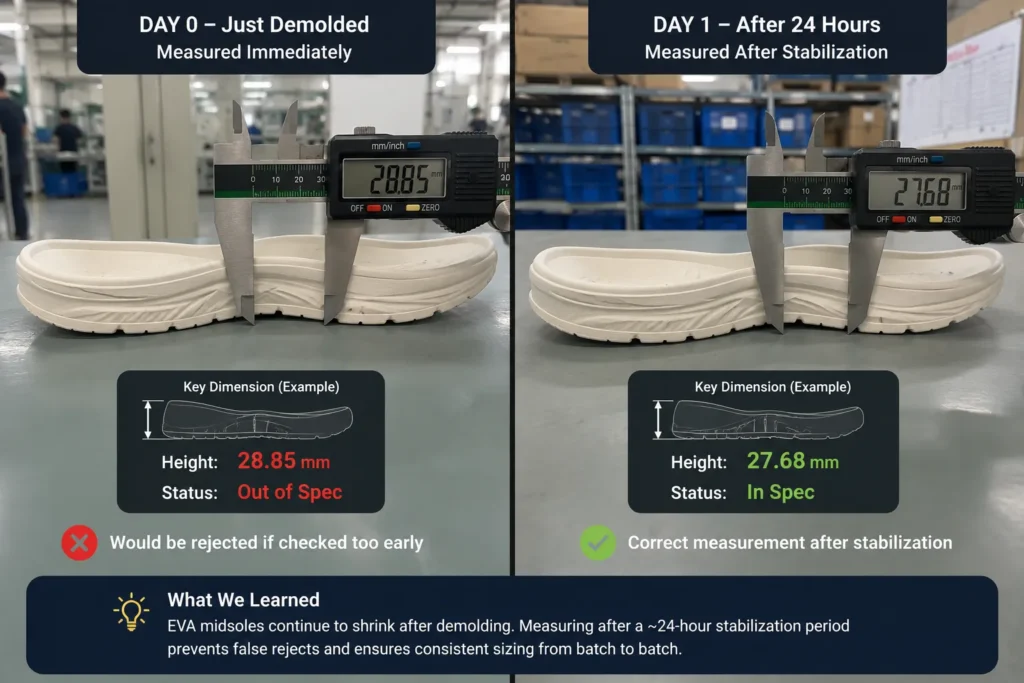
One thing we only fully understood after measuring it ourselves: EVA soles keep moving after they leave the mold. When we started logging dimensions across a batch of EVA midsoles, we found that pieces measured straight off the machine were noticeably larger than the same pieces measured the next day — the parts continued to shrink as they cooled and stabilized over roughly the first 24 hours. Checking dimensions too early was flagging good soles as oversized. Based on that, we changed our internal rule to measure critical dimensions only after a stabilization period rather than at demolding, and we size the molds to compensate for that expected shrinkage. That is a large part of how we keep finished sizes consistent from the first pair of a run to the last.
6️⃣6. Demolding
Once the part reaches adequate mechanical rigidity, the clamping unit opens. Mechanical ejector pins, air-poppet valves, or robotic grippers complete the demolding step, releasing the formed component from the mold cavity without distorting delicate tread edges or sealing margins.
7️⃣7. Trimming and Inspection
Ejected components move to finishing lines where technicians trim sprues, runners, and flash along parting lines using pneumatic shears or heated blades. Quality control technicians inspect sole dimensions, shore hardness (durometer), compound density, and color consistency before releasing parts to assembly.
📖 For detailed processing parameters and temperature profiles, see our technical guide: Footwear Injection Molding Process: Step-by-Step Breakdown.
📊Process Stage Summary & Key Parameters
🧪 What Materials Are Used for Footwear Injection Molding?
Selecting appropriate shoe sole materials determines sole weight, flex endurance, traction, and unit cost. Polymers differ significantly in abrasion resistance, which is why durability is measured against standardized test methods. As specified in ISO 20871, outsole abrasion resistance is determined using a rotating abrasive drum test. This standard allows buyers to evaluate material durability across EVA, TPR, TPU, and PVC formulations under identical test parameters before finalizing material specifications.
Rotating abrasive drum tests provide an objective, standardized metric for comparing volume loss across different polymer formulations before committing to full-scale production tooling.
🔬Detailed Polymer Breakdown & Specifications
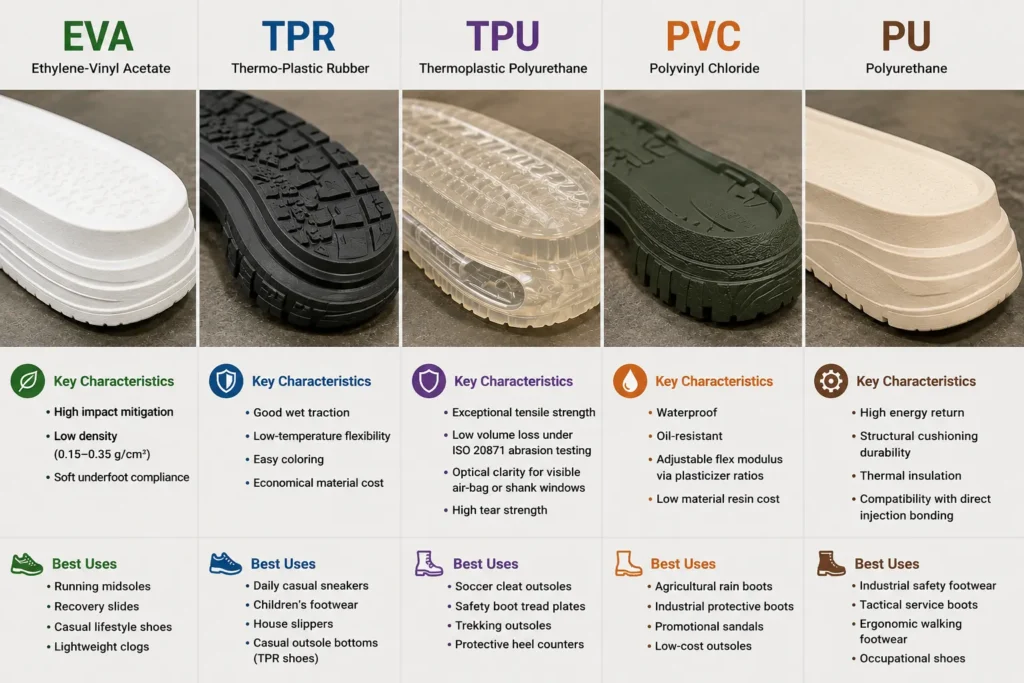
👟EVA (Ethylene-Vinyl Acetate)
EVA material is widely specified for lightweight cushioning applications. When processed using EVA injection molding, liquid or granular EVA resin blended with chemical blowing agents expands inside the mold cavity into a closed-cell foam structure containing micro-nitrogen pockets.
- Key Characteristics: High impact mitigation, low compound density (0.15 to 0.35 g/cm³), soft underfoot compliance.
- Best Uses: Running midsoles, recovery slides, casual lifestyle shoes, lightweight clogs.
Sourcing Note: Mandate compression-set limits (ASTM D395 or ISO 815) in technical spec sheets to prevent EVA midsoles from experiencing premature permanent collapse under repeated foot impact.
👞TPR (Thermo-Plastic Rubber)
TPR material combines the melt processing characteristics of thermoplastics with the slip resistance of traditional vulcanized rubber.
- Key Characteristics: Good wet traction, low-temperature flexibility, easy coloring, economical material cost.
- Best Uses: Daily casual sneakers, children’s footwear, house slippers, casual outsole bottoms (TPR shoes).
Sourcing Note: TPR is denser than EVA foam. Specify cored-out flex cavities on sole interiors to reduce total sole weight without sacrificing outer perimeter durability.
🛡️TPU (Thermoplastic Polyurethane)
TPU material is an engineered polymer selected for high mechanical strength, flex-fatigue endurance, and oil resistance.
- Key Characteristics: Exceptional tensile strength, low volume loss under ISO 20871 drum abrasion testing, optical clarity for visible air-bag or shank windows, high tear strength.
- Best Uses: Soccer cleat outsoles, safety boot tread plates, trekking outsoles, protective heel counters.
Sourcing Note: TPU resin carries higher material costs and higher density (1.10 to 1.25 g/cm³). Design TPU outsoles with thin wall webs (1.5 mm to 2.0 mm) to optimize weight and compound expenditure.
🥾PVC (Polyvinyl Chloride)
PVC material is a widely available synthetic polymer used primarily in utility, industrial, and promotional footwear categories.
- Key Characteristics: Waterproof, oil-resistant, adjustable flex modulus via plasticizer ratios, low material resin cost.
- Best Uses: Agricultural rain boots, industrial protective boots, promotional sandals, low-cost outsoles.
Sourcing Note: PVC compounds must comply with international chemical regulations (REACH, RoHS, California Proposition 65) regarding restricted phthalate plasticizers. Require certified phthalate-free material test reports from chemical suppliers.
⚙️PU (Polyurethane)
Polyurethane injection molding relies on the metered reaction of liquid polyol and isocyanate compounds mixed immediately before injection into the mold cavity. This reaction forms a microcellular elastomer (PU material).
- Key Characteristics: High energy return, structural cushioning durability, thermal insulation, compatibility with direct injection bonding.
- Best Uses: Industrial safety footwear, tactical service boots, ergonomic walking footwear, occupational shoes.
Sourcing Note: Polyurethane is subject to long-term hydrolytic degradation (hydrolysis) in high-humidity environments. Specify polyether-based PU formulations rather than polyester-based PU for shoes destined for tropical regions.
📊Polymer Properties & Sourcing Matrix
📖 For detailed polymer properties and Shore hardness scales, review our resource guide: Which Materials Are Used for Footwear Injection Molding?
⚙️ What Are the Main Types of Injection Molding Used in Footwear?
Understanding different structural types of injection molding helps sourcing teams align footwear designs with factory machinery setups.
Selecting between unit sole molding and direct injection dictates assembly line layout, bonding strength protocols, and seasonal design adaptability.
👟1. Sole Injection Molding
In standalone sole molding, unit outsoles, midsoles, or cupsoles are molded on independent injection presses. Molded soles are trimmed, inspected, and transferred to traditional assembly lines, where operators manually rough, prime, cement, and press them onto lasted uppers.
A single molded unit sole can be adapted to multiple upper designs and materials across different seasonal lines.
🤖2. Direct Injection Molding
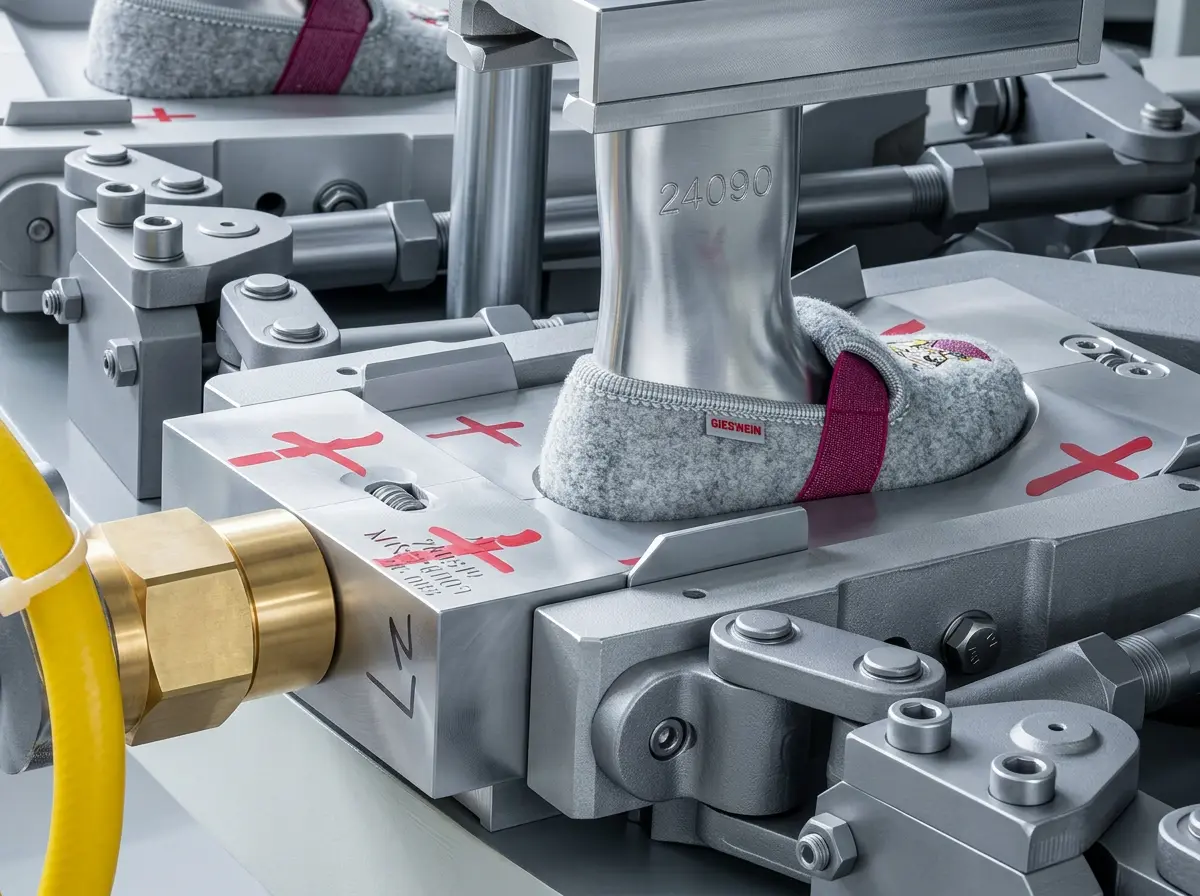
In the direct injection process, sole molding and upper attachment occur simultaneously in a single machine operation. A pre-stitched upper is lasted over a metal foot-form, which lowers directly into the top of the open injection mold cavity to create a tight featherline seal.
When molten polymer (typically PU, TPU, or PVC) is injected into the lower mold cavity, it fills the tread pattern while directly contacting and keying into the woven fibers or roughened leather along the upper margin. As the polymer cures, it forms a mechanical and chemical bond with the upper without intermediate adhesives.
High bond strength, water-tight sole margins, elimination of adhesive delamination risks, and zero solvent cement usage.
📊Structural Injection Molding Comparison
⚖️ Direct Injection vs. Separate Sole Injection: What Is the Difference?
Evaluating which production setup suits your sourcing requirements requires comparing structural, tooling, and cost characteristics:
Direct injection prioritizes bond integrity, water resistance, and automated efficiency, whereas separate sole injection offers lower tooling entry costs and versatile seasonal styling flexibility.
📊Technical Parameter Comparison
👟 What Types of Footwear Use Injection Molding?
Injection molding is implemented across diverse product categories in global footwear manufacturing.
🏃♂️Athletic and Casual Shoes
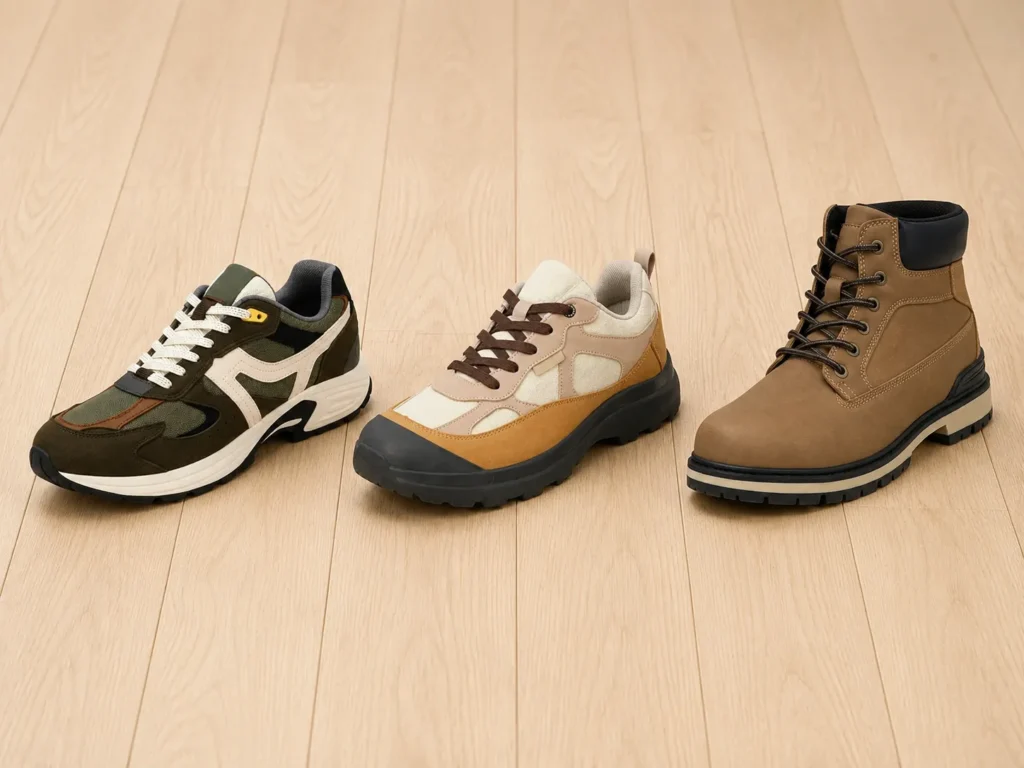
Athletic sneakers and casual lifestyle footwear utilize EVA injection molding to manufacture cushioned midsoles. Technical cleats for soccer and baseball use multi-shot TPU injection to combine structural shank stability with flexible forefoot tread plates.
📖 Explore our manufacturing capabilities on our dedicated product page: #Athletic and Casual Footwear Solutions.
🩴Sandals and Slippers
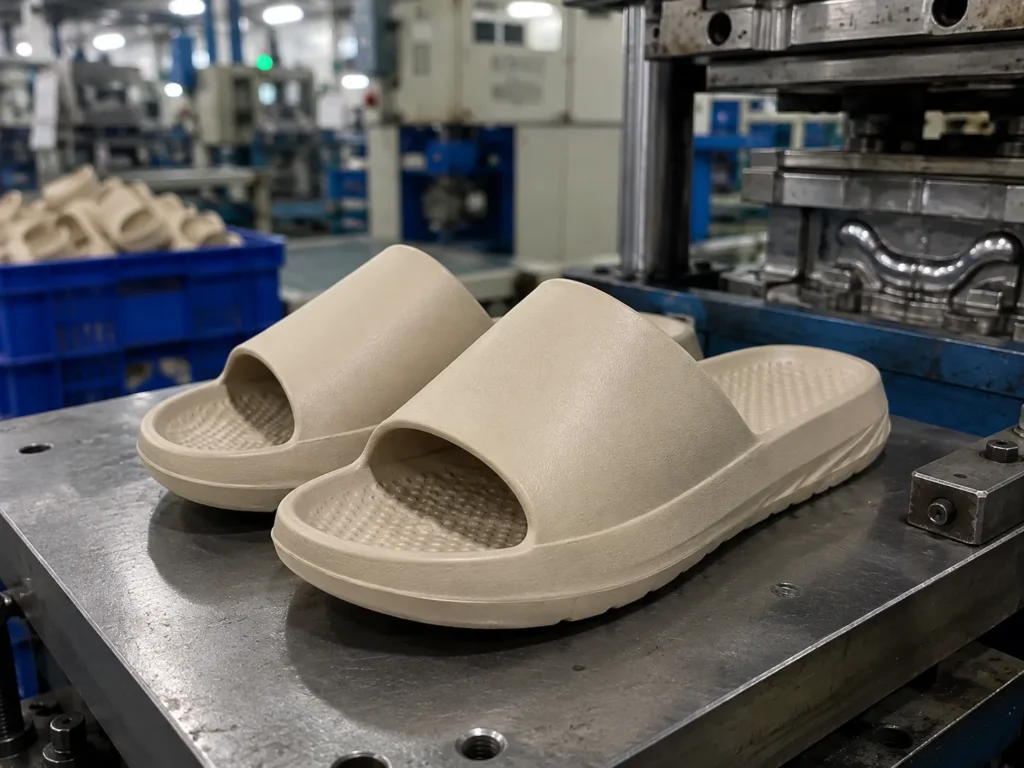
Slide sandals, beach thongs, and casual footbeds use TPR or PVC injection molding for high-output manufacturing at low unit costs. Straps and footbeds can be molded in a single operation using dual-color injection machines.
🐊Clogs and One-Piece Molded Shoes
A clear commercial example of monolithic injection molding is Crocs. When the brand introduced its Classic Clog in 2002, it utilized a proprietary closed-cell EVA-based resin compound (Croslite) molded as a single integrated shoe rather than a multi-component assembled construction.
This manufacturing approach addressed cost structures and product uniformity at scale. Because the clog is produced in a single mold shot, secondary manual assembly labor is minimized, and dimensional consistency is maintained across production batches. Crocs later acquired its primary molding supplier (Foam Creations / Finproject NA) to maintain control over tooling development and resin formulations.
For sourcing managers, this example illustrates a core manufacturing principle: when a product design permits, shifting from multi-piece manual assembly to single-piece injection molding significantly alters unit cost structures and manufacturing scalability. (Source: Industrial Case Study / Crocs Corporate History).
🥾Work and Safety Footwear
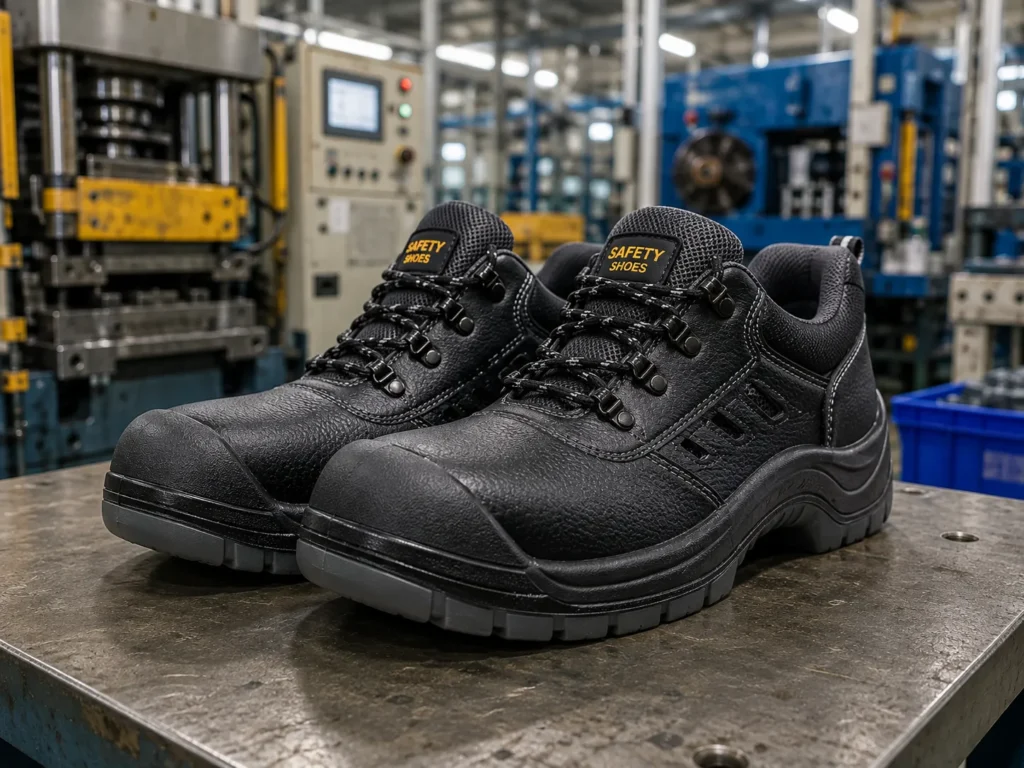
Industrial protective footwear requires high mechanical bond strength and moisture resistance. Direct-injected polyurethane (PU) paired with durable TPU outsoles represents the dominant construction for safety boots. Direct injection encapsulates protective steel or composite toe caps within the upper structure while meeting European ISO 20345 safety standards for impact and compression resistance.
🌧️Boots and Utility Footwear
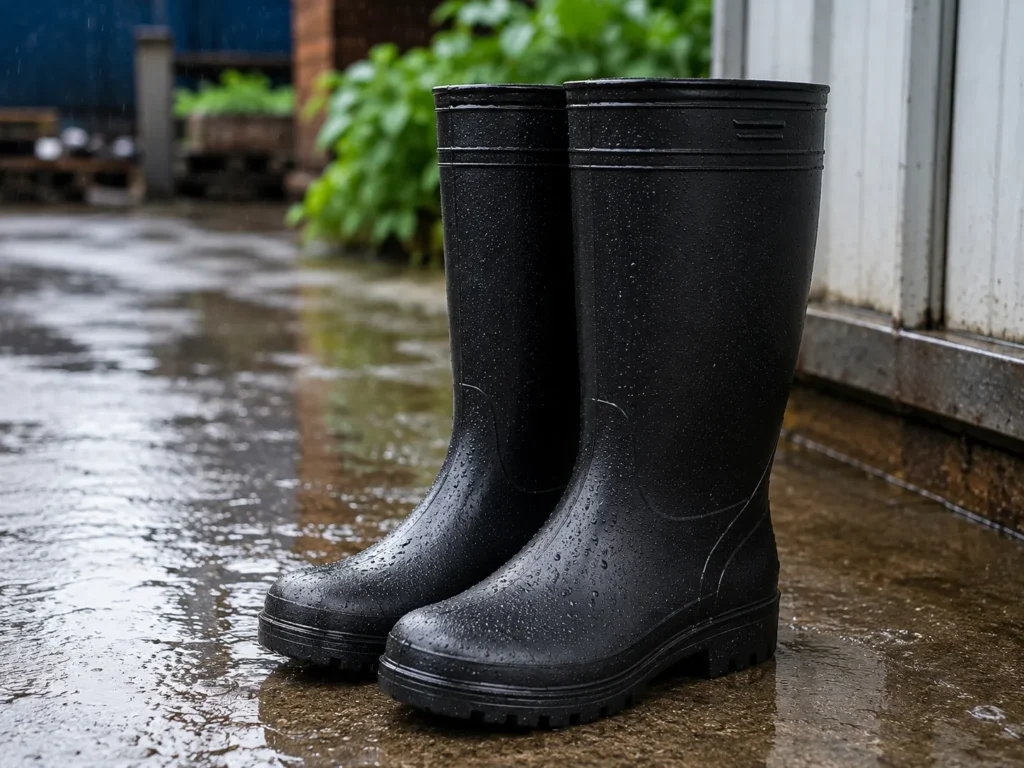
Waterproof rain boots, agricultural footwear, and industrial wellingtons are manufactured on vertical injection machines. Single-shot or double-shot PVC or TPR formulations mold the shaft, ankle section, and lugged outsole in a continuous process, creating seamless waterproof protection.
🏥Medical and Comfort Footwear
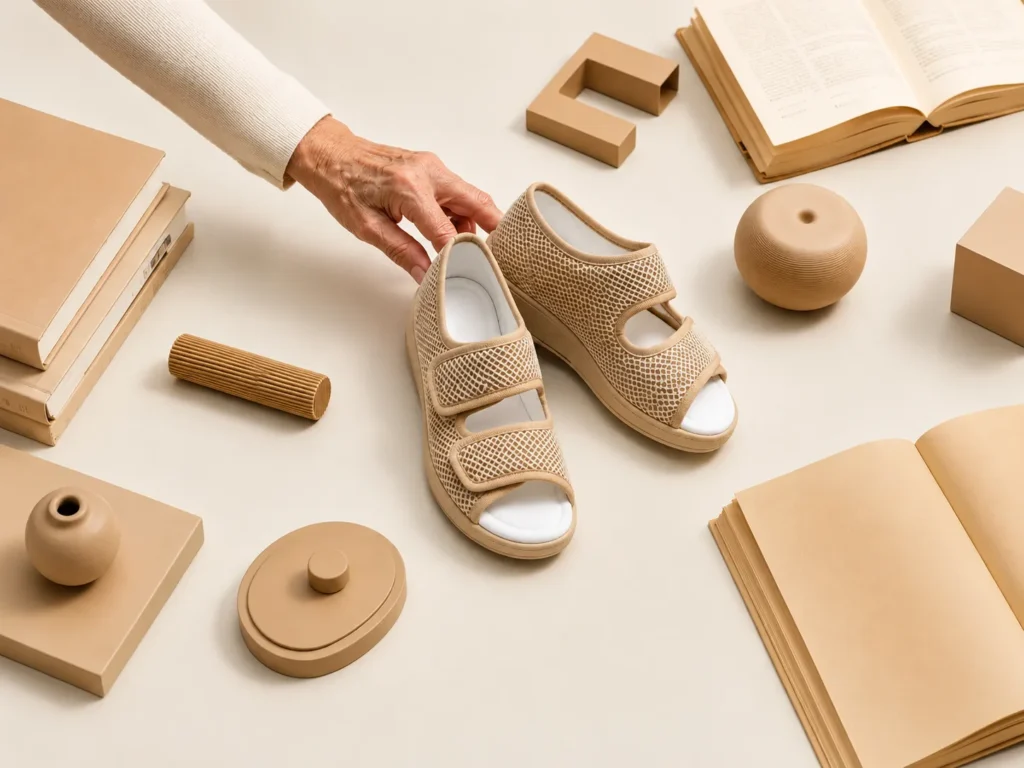
Occupational footwear for healthcare workers relies on direct-injected microcellular PU or injection-molded EVA. Non-porous surface structures allow for easy cleaning and chemical disinfection, while molded contoured footbeds support ergonomic weight distribution during extended shifts.
📖 Review specialized occupational options on our application page: #Medical and Comfort Footwear Manufacturing.
📊Footwear Categories & Molding Applications Summary
⚖️ Injection Molding vs. Cemented Shoe Construction
Choosing between injection molding and traditional cemented construction requires balancing tooling investment against assembly line labor costs.
Injection molding utilizes automated polymer injection and direct chemical bonding to minimize labor and enhance bond durability, whereas traditional cemented construction relies on manual preparation and solvent adhesives for maximum style flexibility.
📊Manufacturing Parameter Comparison Table
💰 What Determines the Cost of Footwear Injection Molding?
Accurate budget forecasting requires evaluating the primary operational factors that govern tooling and production unit costs.
Balancing initial tooling scale, polymer resin density, and multi-shot machine complexity is vital for managing both capital expenditure and per-unit production targets.
🛠️1. Mold Complexity and Number of Sizes
Upfront capital expense is heavily influenced by metal mold design. Molds featuring intricate 3D side-wall textures, multi-piece side-action cores (for undercuts), or multi-cavity inserts require more machine work than standard two-piece open/close molds.
Because footwear sizing spans extended scales across men’s, women’s, and children’s categories, every full and half size requires an individual left-and-right metal mold set.
⚖️2. Material and Sole Weight
Raw material costs are determined by polymer weight (cost per kilogram). A thick platform outsole weighing 800 grams in high-density TPU requires substantially higher resin expenditure than a low-profile EVA midsole weighing 180 grams. Incorporating internal cored grid channels reduces weight and resin consumption while maintaining compressive structural support.
🎨3. Colors and Density Structure
Single-color, single-density injection represents the most economical configuration. Producing multi-color outsoles or dual-density structures (such as a soft EVA core paired with a dense rubber tread) requires multi-shot injection machinery, complex tooling, and longer station cycle times—increasing component unit costs by 20% to 40%.
⏱️4. Production Quantity and Cycle Time
Higher production volumes amortize initial tooling and machine setup costs over more pairs. Machine station cycle time (e.g., 45 seconds vs. 90 seconds) directly affects daily factory output. Formulations that require extended cooling or vulcanization periods inside the mold increase machine-hour operational charges.
📊Injection Molding Cost Drivers Matrix
🎯 How Do You Choose the Right Injection Molding Process for a Shoe?
Sourcing teams should apply a structured evaluation framework when selecting an injection process for new footwear programs:
Balancing construction requirements, technical performance targets, geometric feasibility, and production volume ensures optimal process selection.
1️⃣1. Footwear Type and Construction
For occupational safety shoes or utility boots, direct injection molding with PU/TPU provides water-tight seams and high bond strength. For lifestyle sneakers requiring seasonal upper redesigns over a shared bottom, standalone unit sole molding combined with cemented lasting offers higher styling flexibility.
2️⃣2. Material and Performance Specifications
Define precise physical performance targets in the factory technical pack:
- Target Mass: Specify maximum component weight in grams per size.
- Shore Hardness: Define hardness ranges using Shore C for cushioning midsoles ($45^\circ \pm 3^\circ \text{ Shore C}$) or Shore A for outsoles ($65^\circ \pm 5^\circ \text{ Shore A}$).
- Abrasion and Flex Endurance: Set maximum volume loss under ISO 20871 drum abrasion tests ($< 150 \text{ mm}^3$) and minimum flex cycles under ISO 17707 testing ($> 30,000 \text{ flex cycles}$ without cut growth).
3️⃣3. Sole Geometry and Mold Design
Review 3D CAD sole models with factory mold engineers prior to tooling production. Eliminate unnecessary sharp internal corners, non-functional thick resin pockets, or severe undercuts that risk trapped air, sink marks, or demolding tears during high-speed production cycles.
4️⃣4. Production Order Volumes
Evaluate long-term demand projections. If initial order volumes fall below 1,000 pairs per size, custom tooling costs will significantly increase amortized per-unit costs. In these cases, evaluate open-market stock injection molds (where tooling costs are already amortized by the vendor) and customize upper elements instead.
5️⃣5. Tooling Capital Budget
Establish target landed cost limits before approving CNC tooling cuts. Balance initial mold development costs against target FOB unit prices. High-volume, multi-season programs easily absorb initial tooling investments because amortized mold costs drop to pennies per pair over the product life cycle.
📊Process Selection Criteria Matrix
🤔 Is Injection Molding Right for Your Footwear Project?
Determining whether injection molding fits your footwear project depends on evaluating production volume thresholds, design flexibility needs, capital budgets, and structural durability requirements.
✅When Injection Molding Is a Good Choice
- High-Volume Production: Projected demand exceeds 1,000 to 5,000+ pairs per style across multi-season lifecycles.
- Strict Dimensional Standards: The design requires precise, repeatable component dimensions for automated assembly.
- Demanding Durability Needs: The footwear must endure flexing, abrasion, moisture, or heavy wear without bond separation.
- Monolithic Footwear Concepts: The product concept involves single-piece clogs, slides, or waterproof boots produced in a single machine operation.
⚠️When Another Manufacturing Process May Be Better
- Low-Volume or Custom Runs: Initial production orders are under 300 to 500 pairs per style.
- Frequent Seasonal Outsole Redesigns: Product lines require complete outsole shape changes every few months.
- Limited Capital Budgets: Upfront capital is unavailable for custom metal CNC mold fabrication.
- Traditional Construction Styles: The brand relies on hand-crafted leather construction, vulcanized tape wrapping, or Goodyear welted sole stitching.
📊Injection Molding Suitability Matrix
❓ Frequently Asked Questions (FAQ)
Find technical answers to common questions regarding footwear injection molding materials, tooling durability, quality control, and production processes.
🔹What is the primary difference between EVA and TPU injection molding?
EVA is a closed-cell foam polymer used for shock-absorbing midsoles and lightweight clogs. TPU is a dense plastic used for high-abrasion outsoles, cleats, and protective frames due to its tear strength and wear resistance.
🔹How many production cycles can a footwear injection mold execute?
Precision aluminum molds last between 100,000 and 300,000 injection cycles under normal maintenance. Steel molds endure 500,000 to over 1,000,000 cycles with proper cleaning, preventative maintenance, and anti-corrosion storage protocols.
🔹Can recycled polymer materials be utilized in footwear injection molding?
Yes. Factories routinely process post-industrial recycled (PIR) material trimmings and post-consumer recycled (PCR) TPU, TPR, or EVA resins. Blends containing 15% to 30% recycled content can be processed without significantly compromising mechanical flex or tensile properties.
🔹Why do foamed EVA soles require a stabilization period after demolding?
As hot foamed EVA solidifies outside the mold cavity, it undergoes thermal shrinkage and cellular gas stabilization over roughly 24 hours. Measuring components immediately after demolding provides inaccurate, oversized dimensions.
🔹What causes “flash” along parting lines on an injection-molded sole?
Flash occurs when molten polymer escapes between mold cavity parting lines during injection. It is typically caused by insufficient clamping force, worn or damaged mold seal surfaces, excessive injection pressure, or over-metered shot volumes.
🔹Is direct injection molding more environmentally efficient than manual cementing?
Direct injection eliminates solvent-based primers and adhesives, reducing factory VOC emissions. It also eliminates the energy consumption associated with long adhesive drying and flash-curing heat tunnels on manual assembly lines.
🔹What is the standard lead time for footwear mold fabrication?
Fabricating a size run of aluminum or steel footwear injection molds requires 4 to 8 weeks, including 3D CAD design validation, CNC machining, surface texturing, and initial trial sampling (T1 samples).