Shoe Factory in China for Custom Footwear Manufacturing
SeeU Shoe operates a dedicated footwear manufacturing facility supporting brands that need reliable development, production and repeat-order manufacturing.
From upper preparation and stitching to lasting, sole attachment, finishing, inspection and packing, each production area has a defined role in controlling product shape, construction and quality.
We focus on the production variables that determine whether an approved sample can be reproduced consistently across the full order — not on finished-product appearance alone.
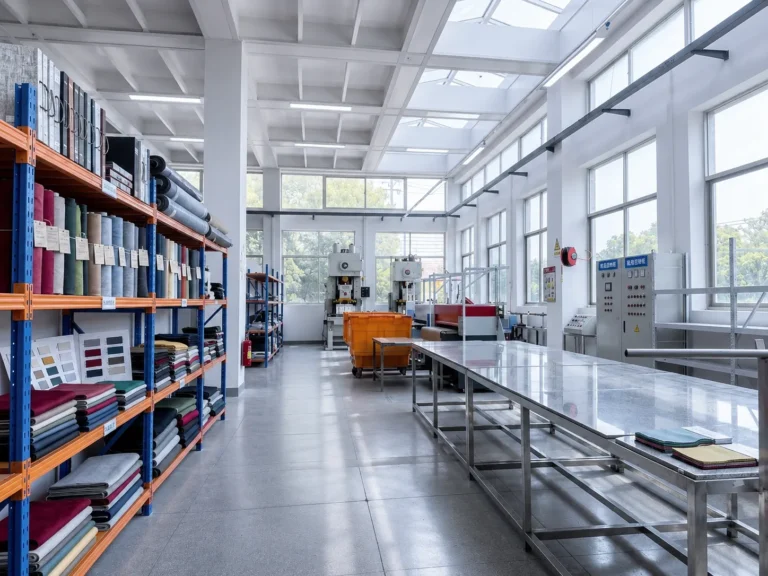
A factory should be judged by organisation, not floor space. What matters to a buyer is whether the team, equipment and workflow are arranged well enough to support repeatable manufacturing — development, upper production, assembly, storage and finished goods inside one system.
2,900m²
Factory area
Dedicated space for development, stitching, lasting and assembly, material storage, finished goods and supporting equipment.
3workshops
Core production workshops
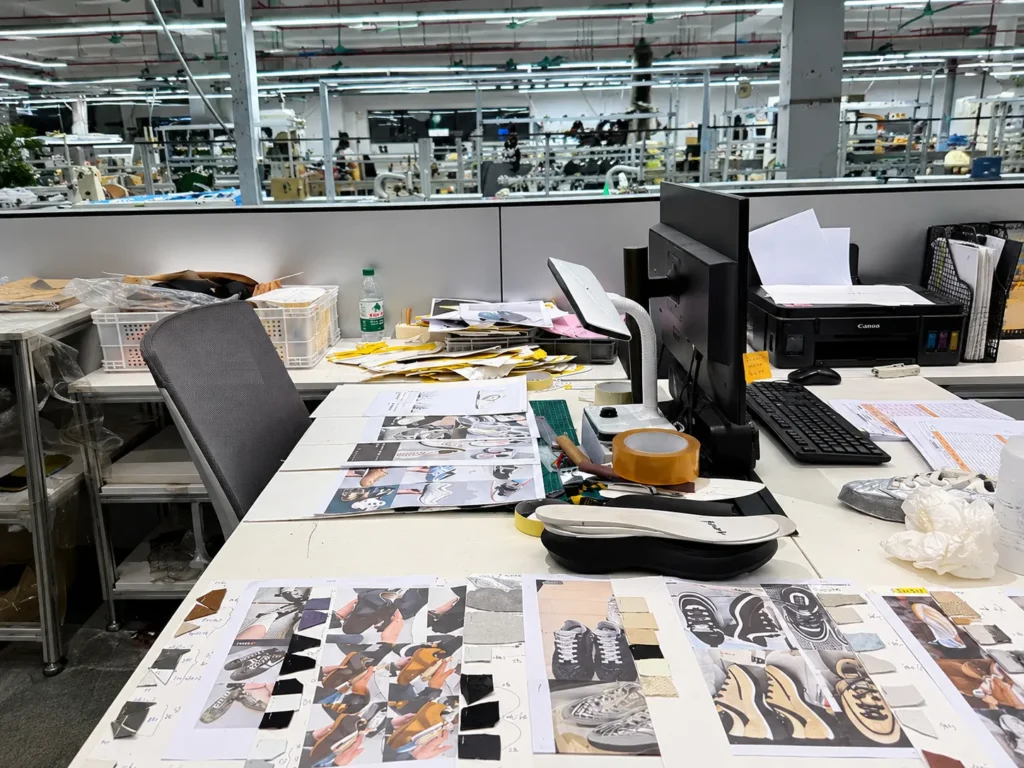
Product Development & Sample Workshop
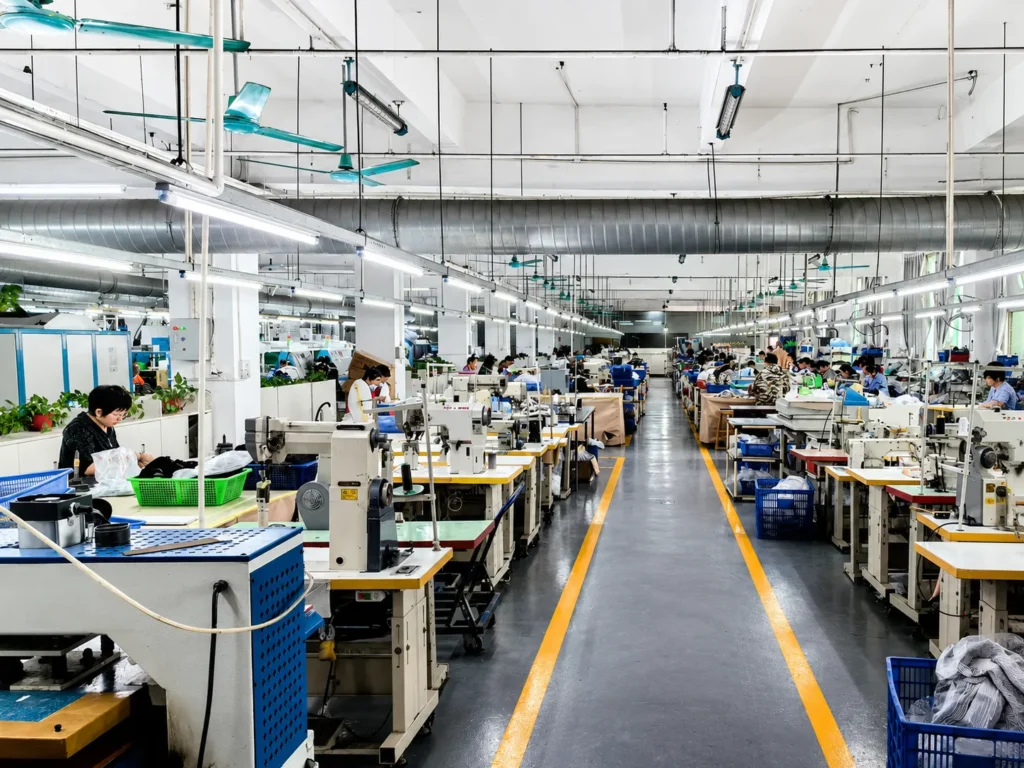
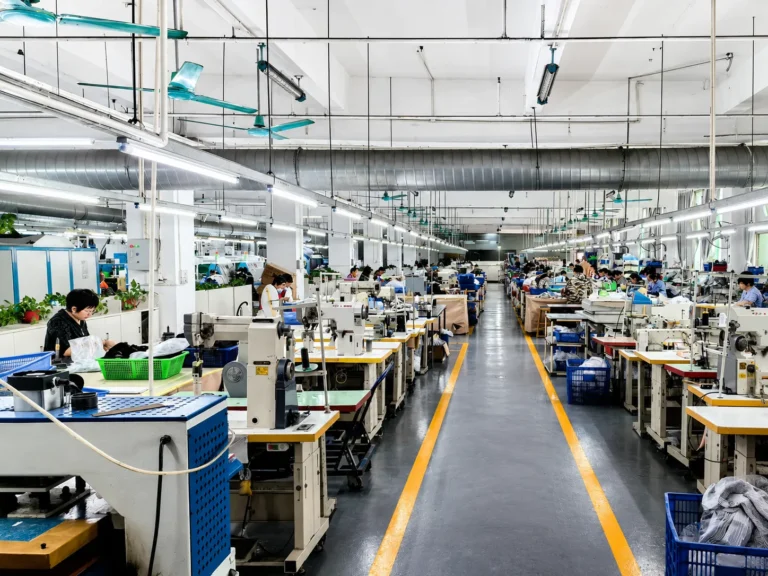
Stitching Workshop
Lasting & Assembly Workshop
1,600pairs / day
Assembly capacity
For applicable programs. Actual output depends on construction, materials and operation complexity.
2,200uppers / day
Stitching capacity
For applicable styles. Varies with panel complexity, stitching detail and reinforcement requirements.
12people
Development team
Pattern preparation, sample construction, fitting adjustment and production preparation before a style enters mass manufacturing.
28workers
Assembly team
Upper shaping, lasting, sole attachment, pressing, finishing and final assembly — the operations that decide shape and sole position.
28operators
Stitching team
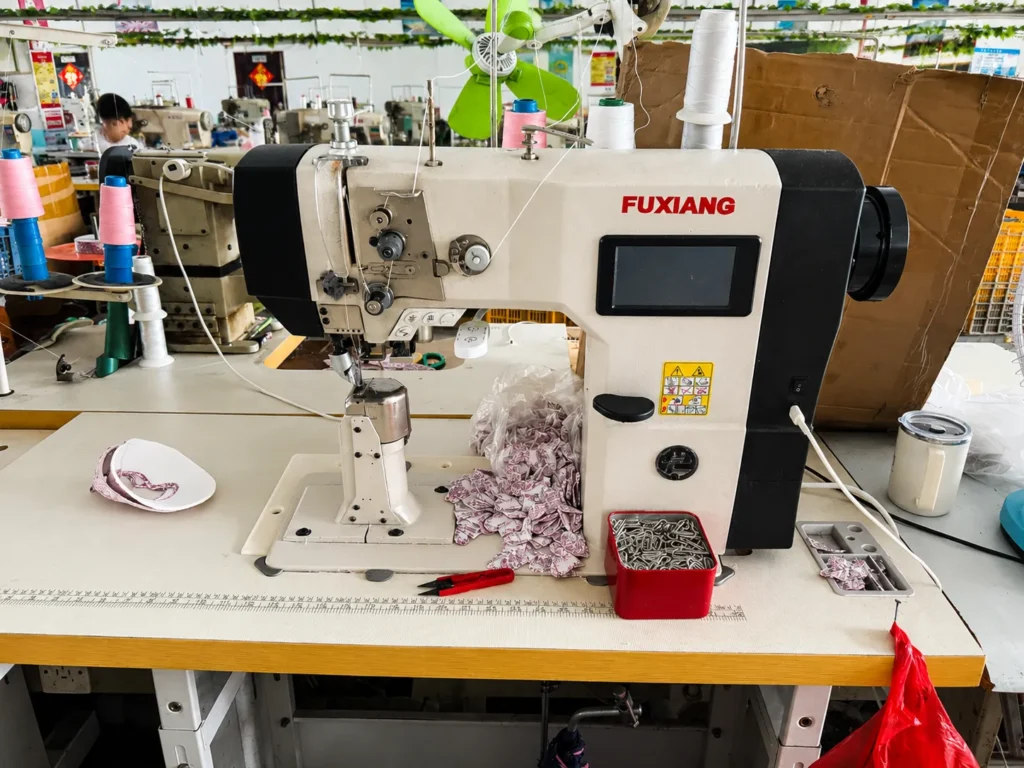
Panel assembly, lining installation and reinforcement stitching across different constructions and upper materials.
~20samples / month
Sample output
New styles developed and sampled in the development & sample workshop each month.
03
Product categories
What Our Factory Is Set Up to Manufacture
Different categories need different materials, constructions and controls. Brands can customise materials, colours, uppers, soles, closures and packaging within each category.
Casual Shoes
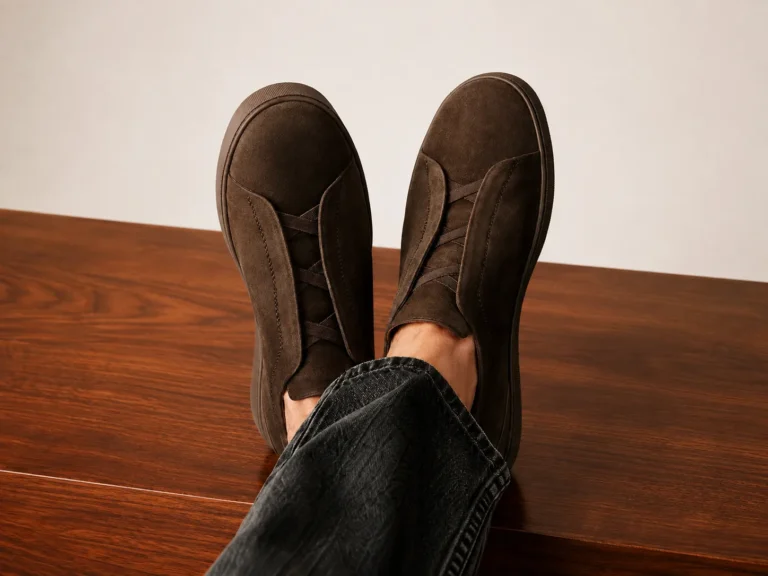
Appearance alone is not enough. Toe profile, vamp shape, stitching alignment, upper tension and sole positioning all decide whether bulk matches the approved sample. See our work as a sneaker manufacturer.
suedeleathertextileknit
Production focusLeft–right shape consistency and clean finishing across the batch
Outdoor & Sports
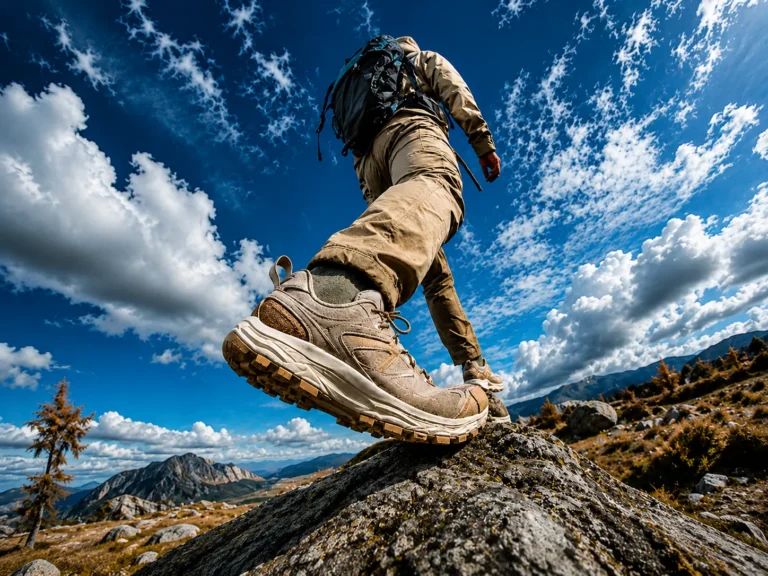
Needs stronger structural control — upper, outsole and reinforcement must work together under greater mechanical stress. See our work as a sports shoes manufacturer.
rubberTPUmeshoverlay
Production focusReinforcement placement, stitching strength, bonding surface preparation
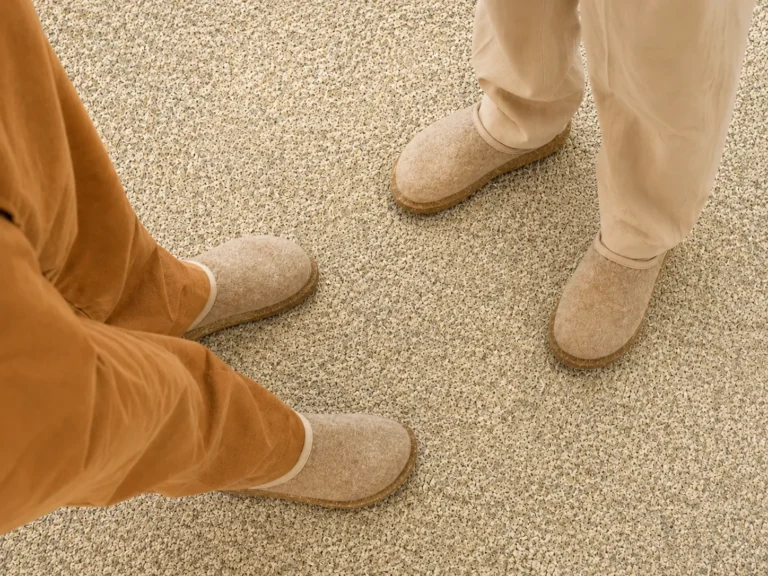
Comfort Slippers
Simpler-looking than structured shoes, but material softness, footbed shape and sole flexibility strongly affect comfort and fit. See our work as a slipper manufacturer.
foamtextilemolded sole
Production focusUpper symmetry, footbed placement, edge finishing, left–right matching
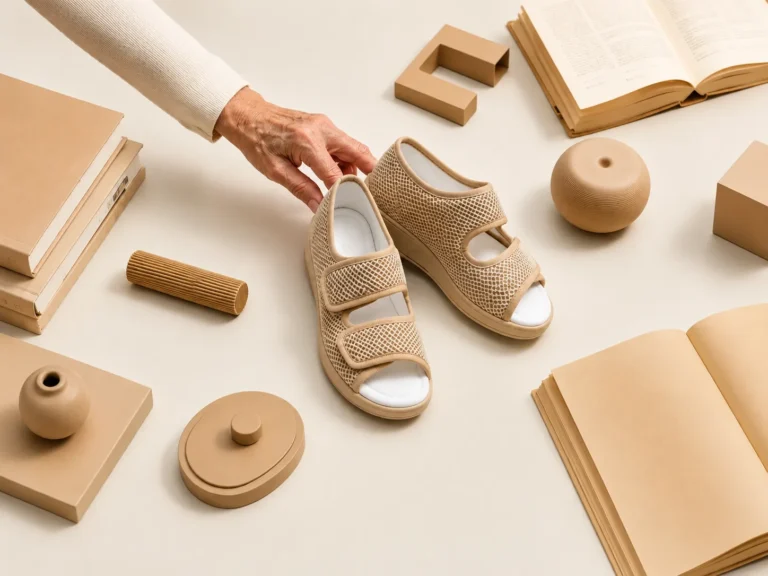
Medical & Recovery
Requires more internal volume and easier foot entry. Described by structural and fit characteristics — we make no medical treatment claims. See our work as an orthopedic shoe manufacturer.
extra depthwide openingremovable bed
Production focusConstruction accuracy, internal space, closure positioning, seam placement
Factory organisation
How the Floor Is Organised
A finished shoe passes through seven specialised stages. Organising them clearly reduces handling mistakes, improves communication between teams and keeps the approved construction stable during production.
STAGE 1 OF 7
Product development & sampling
Before bulk production begins, the development team confirms the construction, materials, patterns and sample specifications that will serve as the production reference. Everything downstream is measured against what is agreed here.
Select a stage above to see where it happens on the floor.
Approved sample → bulk
From Approved Sample to Bulk Production
Development determines what should be made. Production determines whether it can be reproduced.
Factory production begins only after the final sample, materials, construction details, colours and specifications are approved.
Approved materials and components are prepared to the final production specification. Material identity, colour and construction requirements must match the approved project before production begins.
02
Cutting & upper preparation
Upper materials are cut to the approved patterns. Cutting position and component identification matter most where grain direction, stretch, texture or colour variation can change the final appearance.
03
Stitching
Prepared components are sewn into completed uppers. Seam position, panel alignment and left–right consistency must stay stable across the whole batch.
04
Lasting
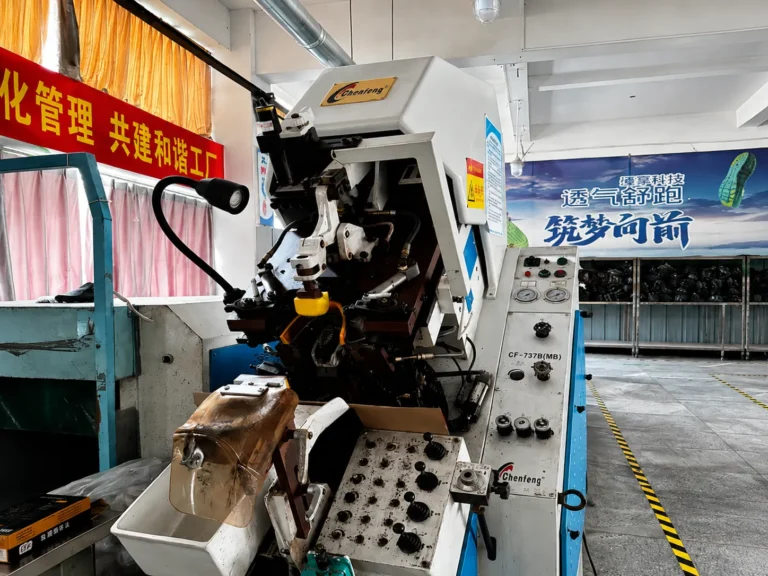
The upper is pulled and formed over the shoe last. This stage sets toe profile, heel position, upper smoothness and overall symmetry.
05
Sole attachment
The outsole is bonded, pressed or molded per the approved method. For cemented constructions, surface preparation, primer, adhesive application, activation and pressing are all live variables.
06
Finishing
Excess adhesive, loose threads and production marks are removed. Accessories and laces are added where required.
07
Inspection
Finished shoes are reviewed for appearance, construction, shape, pair matching and project-specific requirements.
08
Packing
Approved shoes are packed to the customer’s packaging specification and organised for shipment.
Three workshops
Where Each Stage Actually Happens
Three workshop functions, one shared specification. Each supports a different manufacturing stage while working from the same approved sample reference.
1,600PAIRS / DAY
Workshop 01
Lasting & Assembly
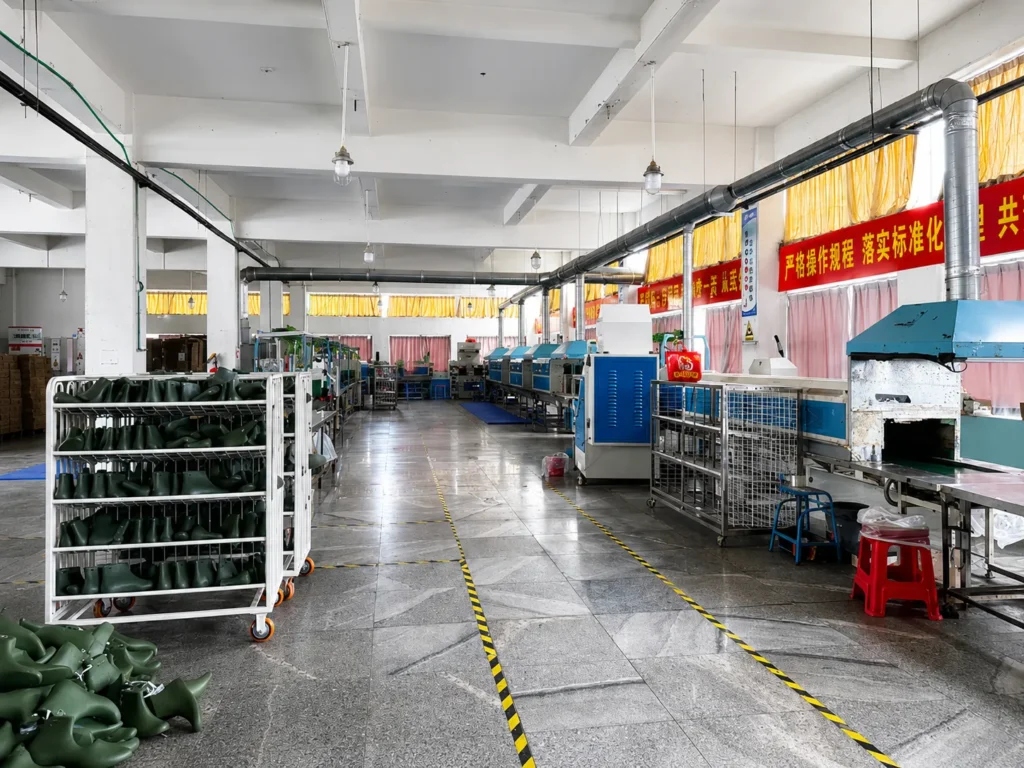
Where stitched uppers become finished shoes. Around 28 production workers for applicable programs.
Upper shaping & lasting
Incorrect tension during lasting creates wrinkles, distortion or left–right differences.
Sole bonding
Bond quality depends on the whole system — roughing, cleaning, primer, coverage, activation — not the adhesive alone.
Sole pressing
Correct positioning and pressure distribution reduce edge gaps and sole misalignment.
Finishing & assembly
The goal is the same approved appearance repeatedly, not one good sample.
2,200UPPERS / DAY
Workshop 02
Stitching Workshop
Converts individual components into complete uppers. Around 28 operators for applicable styles.
Upper panel assembly
Panel position directly influences appearance and fit of the finished upper.
Lining installation
Poor placement creates internal folds, visible distortion or discomfort.
Reinforcement stitching
Added around eye stays, heel sections and structural panels as the design requires.
Stitching consistency
For B2B orders the goal is repeatability across the batch, not one perfect prototype.
~20SAMPLES / MONTH
Workshop 03
Development & Sample
Connects footwear development with production. A team of around 12 staff.
Pattern preparation
Patterns define the geometry and relationship between upper components.
Sample making
Lets brand and factory verify materials, construction, shape and appearance before bulk.
Construction adjustment
Fit, upper tension, component placement and feasibility issues get solved here, not in mass production.
Production preparation
Once approved, the confirmed specification becomes the manufacturing team’s reference.
Equipment
Machines That Control Critical Production Variables
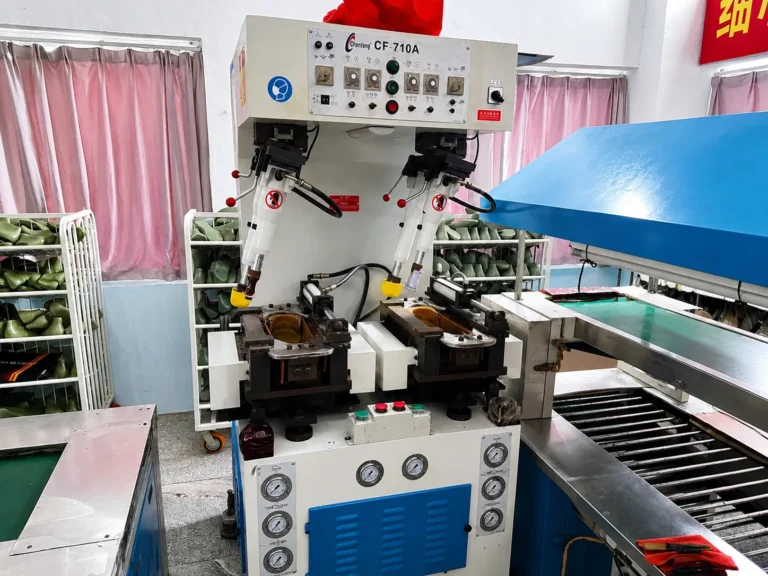
A machine is worth listing because of the variable it controls, not because it exists. For a B2B buyer it is more useful to know what each machine contributes to consistency than to count units on the floor.
M-01
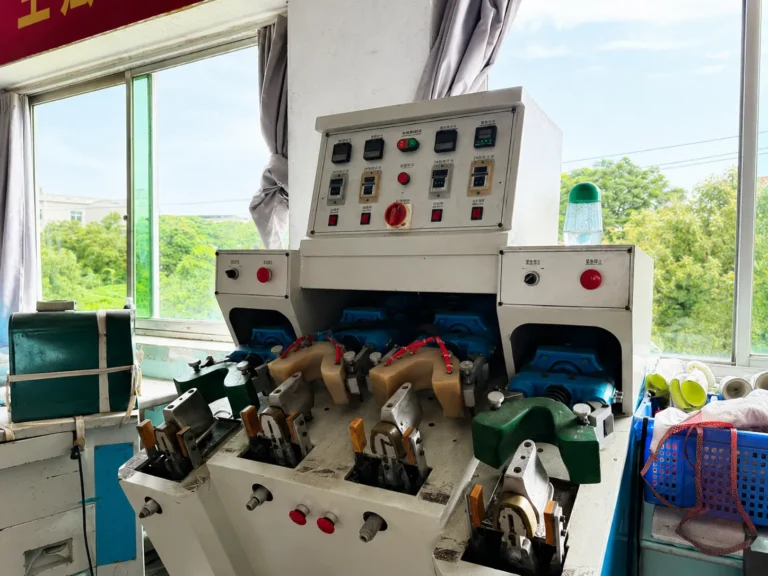
Four-Station Hot & Cold Heel Counter Forming
ControlsContour and structure of the heel counter through controlled heating and cooling.
Why it mattersReduces unwanted rebound, deformation and rear-quarter shape differences between pairs.
M-02
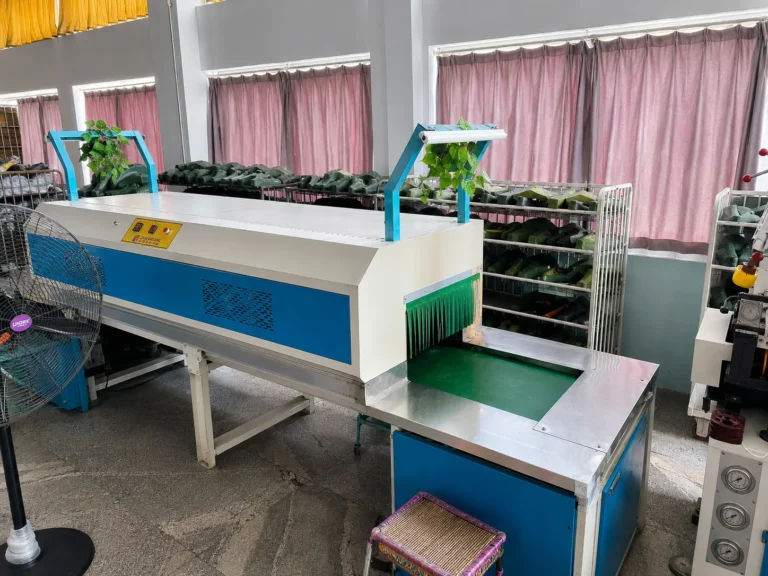
Industrial Heating & Drying Oven
ControlsControlled drying or activation during selected manufacturing processes.
Why it mattersTemperature and timing influence adhesive activation, moisture removal and preparation before pressing.
M-03
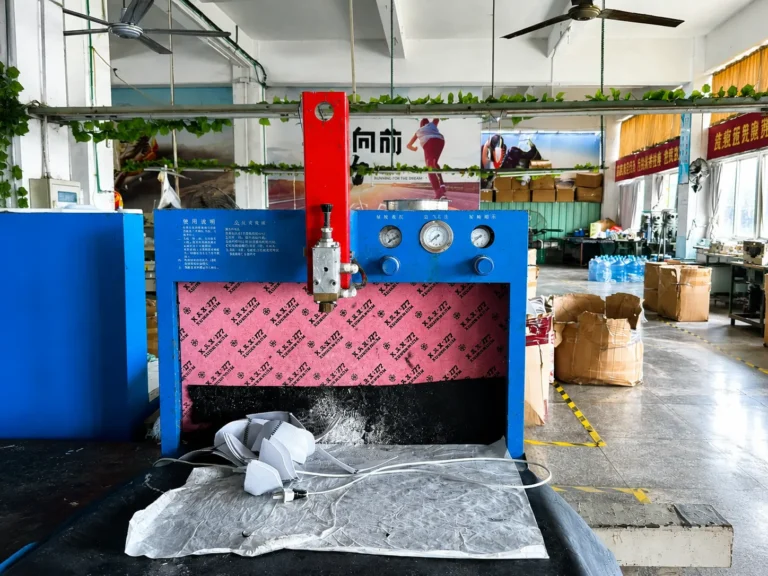
Adhesive Spraying Machine
ControlsAdhesive coverage across prepared bonding surfaces.
Why it mattersUneven application creates inconsistent bonding, particularly around edges and complex outsole shapes.
M-04
Sole Pressing Machine
ControlsPressure applied after upper and sole have been positioned.
Why it mattersStable pressure improves contact between bonding surfaces and reduces gaps or incomplete edge bonding.
M-05
Toe Puff Machine
ControlsStructure at the front of the shoe through toe-puff preparation.
Why it mattersThe toe area drives the visible profile. Inconsistent reinforcement shows up as shape differences between pairs.
M-06
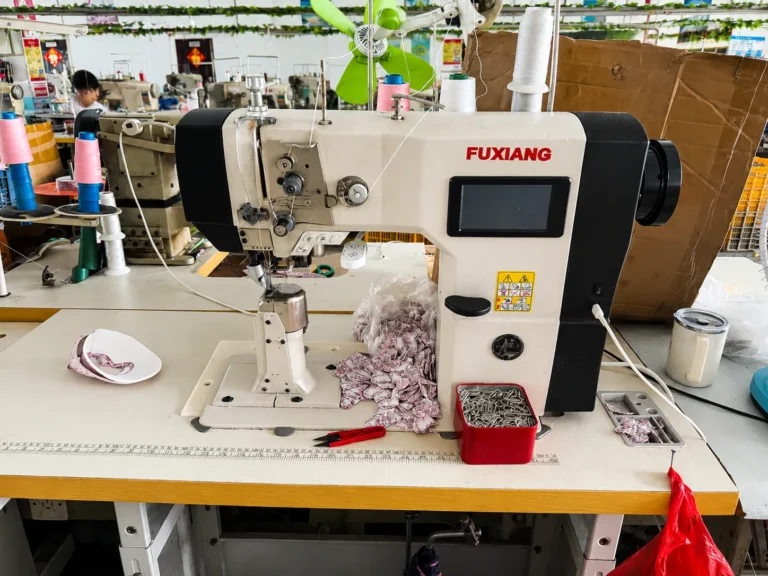
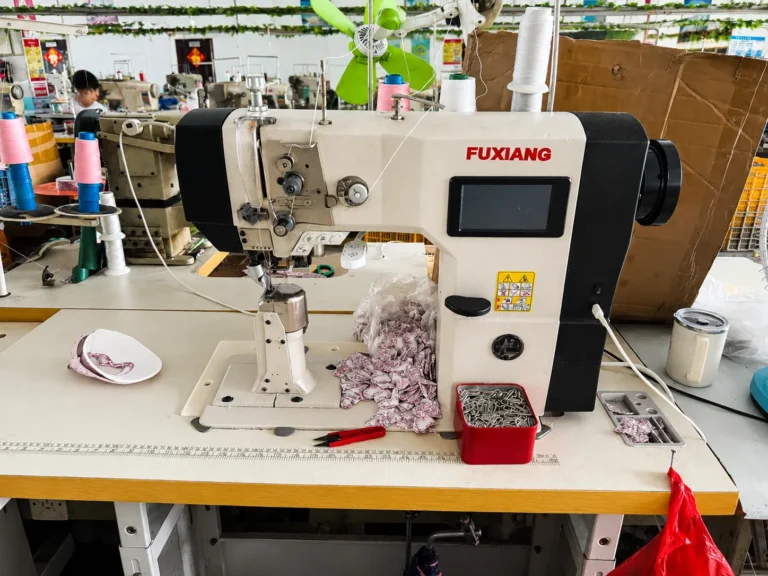
Industrial Sewing Machines
ControlsPanel assembly, lining installation and reinforcement stitching.
Why it mattersSewing quality affects both appearance and structural consistency across the upper.
M-07
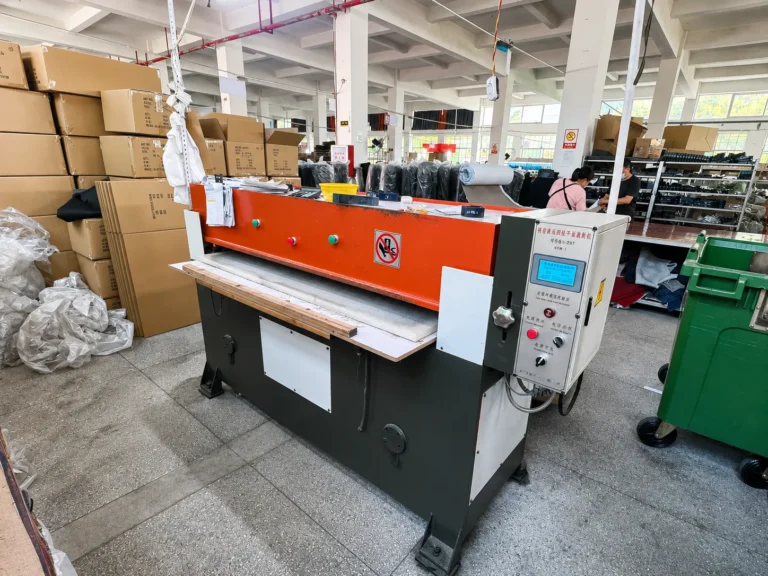
Die-Cutting Machine
ControlsUpper and reinforcement components to specified shapes and dimensions.
Why it mattersAccurate components make later stitching and assembly easier to control and reduce bulk inconsistency.
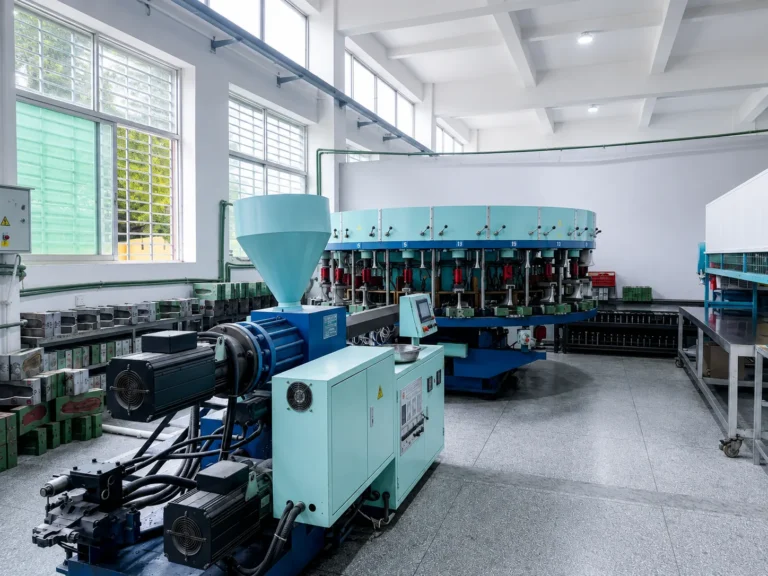
Why it mattersTooling, material behaviour, processing temperature and molding parameters all affect dimensions and consistency.
Capacity
Capacity That Scales With Your Orders
Capacity only means something alongside product complexity. A simple slipper and a multi-material outdoor shoe do not move through a factory at the same speed — so we plan against the actual construction rather than quoting one universal lead time.
2,200uppers / day
Upper production
For applicable constructions. Actual output depends on panel count, stitching operations, reinforcement detail and material behaviour.
1,600pairs / day
Assembly
For applicable styles. Speed varies with lasting complexity, sole construction, finishing requirements and inspection criteria.
What production scheduling actually considers
Order quantity
Footwear construction
Material availability
Number of operations
Equipment requirements
Current line schedule
Inspection requirements
Requested delivery date
For repeat orders, approved materials, patterns, construction details and reference samples reduce unnecessary redevelopment and support greater consistency across seasons.
Bulk consistency
How We Hold the Construction Across the Batch
A good sample is the beginning, not the achievement. The harder problem is reproducing the approved construction across the full production run. These are the six places variation most easily creeps in.
01
Approved sample control
The physical reference for shape, construction and appearance. Manufacturing and inspection compare bulk against what the customer already confirmed.
02
Material batch control
Differences in colour, thickness, surface texture or hardness change the finished shoe, so materials are checked and organised before entering production.
03
Upper construction control
Panel position, stitching, reinforcement and lining placement drive fit and shape. Consistency here makes lasting and assembly easier to control.
04
Lasting & shape control
Upper positioning and shape are checked during lasting to reduce wrinkles, distortion and left–right inconsistency.
05
Sole positioning
Even with the correct upper and sole, poor positioning produces visible asymmetry or uneven edges. Alignment before pressing is its own step.
06
In-line inspection
Issues found during manufacturing are cheaper to fix than issues found after the order is complete. In-line checks catch recurring problems early.
Quality control
Inspection Built Into Production, Not Bolted On
Many footwear defects originate long before final inspection. Material variation, upper misalignment, poor lasting or incorrect bonding preparation cannot reliably be solved at the end of the line — so checks happen at multiple stages.
QC 1
Incoming material check
Materials and components are reviewed before use for obvious issues with type, colour, surface condition or specification.
QC 2
Upper inspection
Completed uppers are checked for stitching quality, panel placement, visible defects and left–right consistency before moving into assembly.
QC 3
Assembly inspection
During assembly, operators and inspectors watch shoe shape, sole positioning and finishing condition.
QC 4
Bonding inspection
Bonding needs particular attention because surface preparation, adhesive application, activation and pressing all affect final performance.
QC 5
Final inspection
Finished footwear is reviewed before packing against the project requirements.
FINAL CHECK COVERSappearanceshoe shapepair matchingstitchingoutsole positionfinishingaccessoriespackaging
Storage & shipment
Material Organisation Prevents Production Errors
A less visible part of manufacturing, and a common source of mistakes. Materials, soles, accessories and packaging all need to stay identifiable through the whole production cycle — especially on multi-size, multi-colour and mixed-SKU orders.
RAW MATERIAL AREA
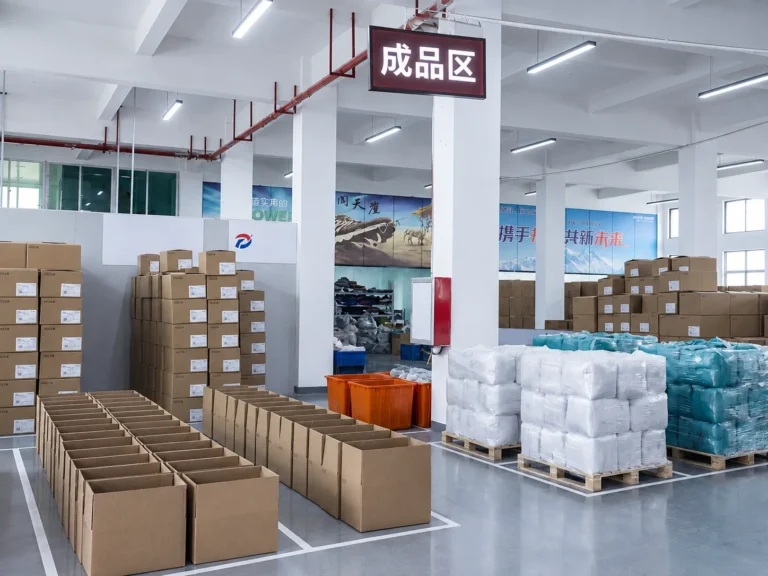
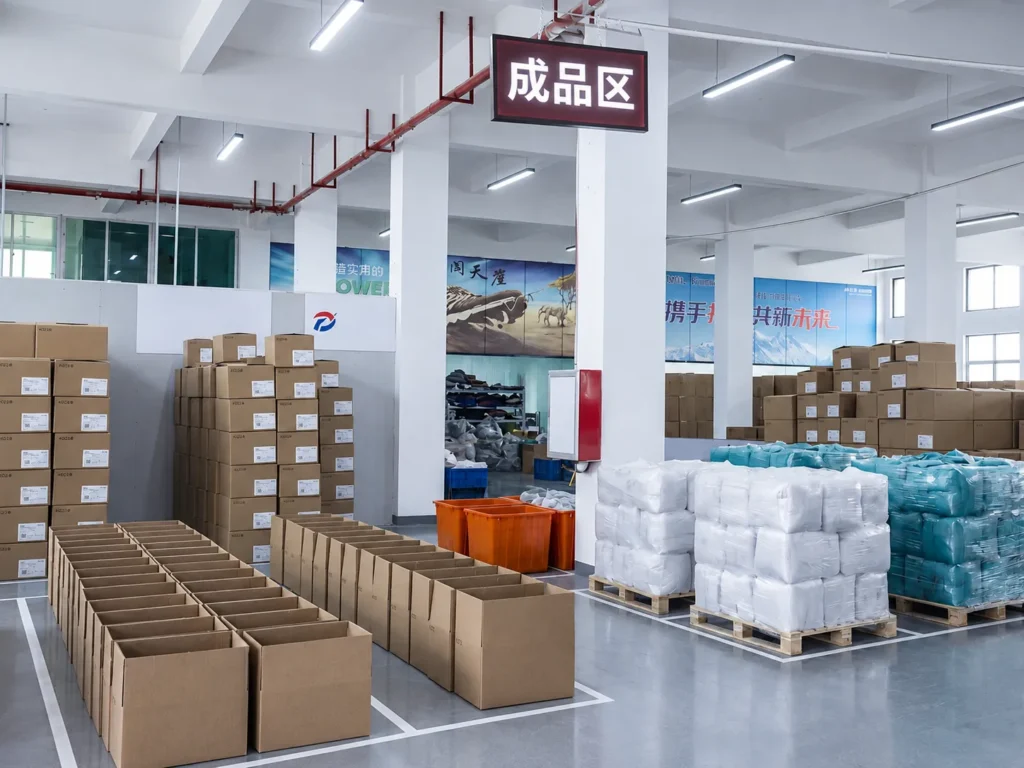
FINISHED GOODS AREA
Raw materials
Upper materials, linings and reinforcement components organised before release into production. Clear identification reduces the risk of mixing similar-looking but different specifications.
Finished goods
Packed footwear moves into a defined finished-goods area while awaiting shipment, keeping completed orders separated from work-in-progress.
Soles, components & packaging
Outsoles, midsoles and molded parts are separated by product and size. Cartons, boxes, labels, tissue and hangtags stored apart so the right packaging meets the right order.
01
Batch organisation
Orders arranged by style, colour, size range, carton number or shipment requirement.
02
Packing
Packed to approved requirements — custom boxes, labels, hangtags, carton marks and branded packaging.
03
Quantity check
Shipment quantities and carton organisation checked against the order before loading.
04
Shipment preparation
Finished goods prepared for container loading or the selected shipping method.
Inside the factory
Credibility Comes From Real Production Evidence
Actual workshops, operators, machines and work-in-progress — not stock photography.
REAL PRODUCTION LINESLasting & assembly in operation
REAL STITCHING OPERATIONSBulk upper production
REAL MACHINESShown where they are used
REAL WAREHOUSEFinished goods & shipment prep
13
Due diligence
What Buyers Can Verify Before Ordering
A professional buyer should not rely on marketing claims alone. Before committing to a production program, it is reasonable to verify the factory, the product capability and the project requirements.
Factory photos & videos
Review current factory images and production videos to understand the physical manufacturing environment.
Product capability
Confirm whether the proposed construction, materials and sole system match our manufacturing experience.
Sample development
For new designs, sampling surfaces construction issues before mass production.
Material requirements
Confirm materials against target appearance, performance, price level and market.
Production schedule
Lead times discussed against the actual product and order, not a generic promise.
Quality requirements
Specific inspection, testing or tolerance requirements confirmed before bulk production.
Packaging requirements
Custom boxes, labels, hangtags, carton marks and retail packaging written into the specification before final packing.
Pre-shipment inspection
Final inspection arrangement agreed before shipment. Factory visits can be arranged by appointment.
0 / 8 checkedTick the items you want to verify — then ask us for them.
The real question
Why Brands Need More Than a Good Sample
A sample may be produced by a small team under close attention. Bulk production is a different problem. Hundreds or thousands of pairs must pass through cutting, stitching, lasting, bonding, finishing and packing while still matching the approved construction.
LEVEL 01
One sample proves development
A good sample shows the product can be made. That is a development achievement, and it is where most supplier evaluations stop.
LEVEL 02
Bulk production proves manufacturing
A successful production order shows the same design can be reproduced repeatedly at scale, through every stage of the floor.
LEVEL 03
Repeat orders prove consistency
Long-term manufacturing means reproducing the product again when the customer returns. For B2B brands this matters more than one impressive prototype.
Project review
What We Need to Review Your Project
If you already have a design, sample or production-ready concept, send what you have. Our team can review construction and manufacturing requirements before quotation and production planning.
01
Design or reference
Drawings, reference photos, an existing sample or a tech pack if available.
02
Target quantity
Estimated order quantity by style or colour.
03
Size range
The size system and range required for your market.
04
Materials
Preferred upper, lining and sole materials — or the performance and price level you need.
05
Target market
Where the footwear will be sold, so product and packaging requirements can be considered.
06
Packaging
Boxes, labels, hangtags, carton marks or private-label packaging requirements.
07
Delivery requirement
Expected delivery schedule, so we can evaluate planning and material availability.
Next step
Start Your Footwear Manufacturing Project
A reliable footwear program depends on more than finding a shoe factory in China that can make one pair of shoes. The factory must understand the approved product, control the major production variables and reproduce the same construction consistently across the full order.
Our production system connects development, stitching, lasting, assembly, inspection, storage and shipment preparation — so brands can move from an approved sample into organised bulk production. Learn more about SeeU Shoe.