
If you already have a finished design, you are looking for OEM. If you want to launch faster from a style a factory already makes, that is ODM. Most of the shoe brands we work with at SeeU Shoe end up doing both, in that order: they start on one of our existing lasts and outsoles, then move to their own mold once a style proves it sells.
In footwear, OEM (original equipment manufacturing) means the factory builds a shoe to your brand’s design and specification. ODM (original design manufacturing) means the factory already owns the base design — the last, the outsole mold and the pattern — and you customize it with your own materials, colors and branding. This OEM vs ODM comparison covers what each model lets you change, who owns what, and how to pick one for your first collection.
What Is the Difference Between OEM and ODM in Footwear?
The OEM vs ODM difference comes down to where the design starts and who owns the result. With ODM you choose from a factory’s existing styles and change the surface — materials, colors, logo, packaging. With OEM the factory develops your design, often including an adjusted last and a new outsole mold, and the design and mold belong to your brand. ODM is faster and cheaper to start; OEM gives you a shoe no other brand can sell.
Sample fees, mold prices and how tooling spreads across an order are covered in our breakdown of how much it costs to make a shoe, so they are not repeated here.
What Can You Change in an ODM Shoe — and What Stays Fixed?
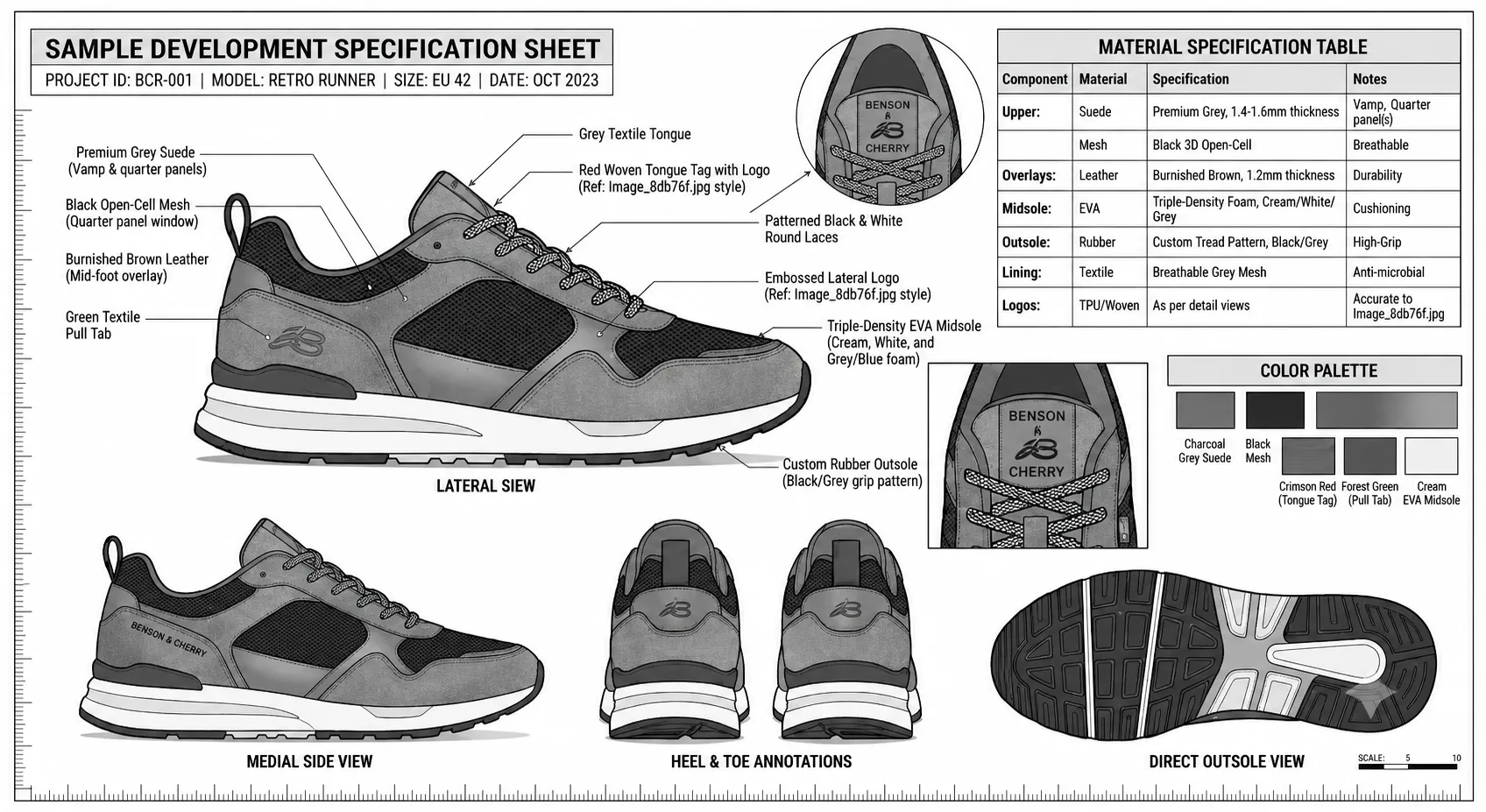
In an ODM shoe you can change anything on the surface of the shoe and nothing that defines its shape. Materials, colors, branding and packaging are open. The last and the outsole are fixed, because they are shared tooling that other brands also order from. That split is what makes ODM fast: no new tooling has to be made before the first sample.
◆Open to Change
- Upper materials — leather, suede, nubuck, microfiber, knit, mesh or canvas, as long as the material suits the base pattern
- Lining, insole and footbed — foam density, cover fabric, printed insole logo
- Colorways — upper, lining, laces, stitching thread and, where the mold allows, outsole color
- Branding — printed, embroidered, embossed or debossed logos, woven labels, tongue and heel tabs, metal or rubber badges
- Trims — laces, eyelets, zippers, hook-and-loop straps
- Packaging — shoebox, tissue, hangtags, barcode and carton labels
◆Fixed by the Shared Tooling
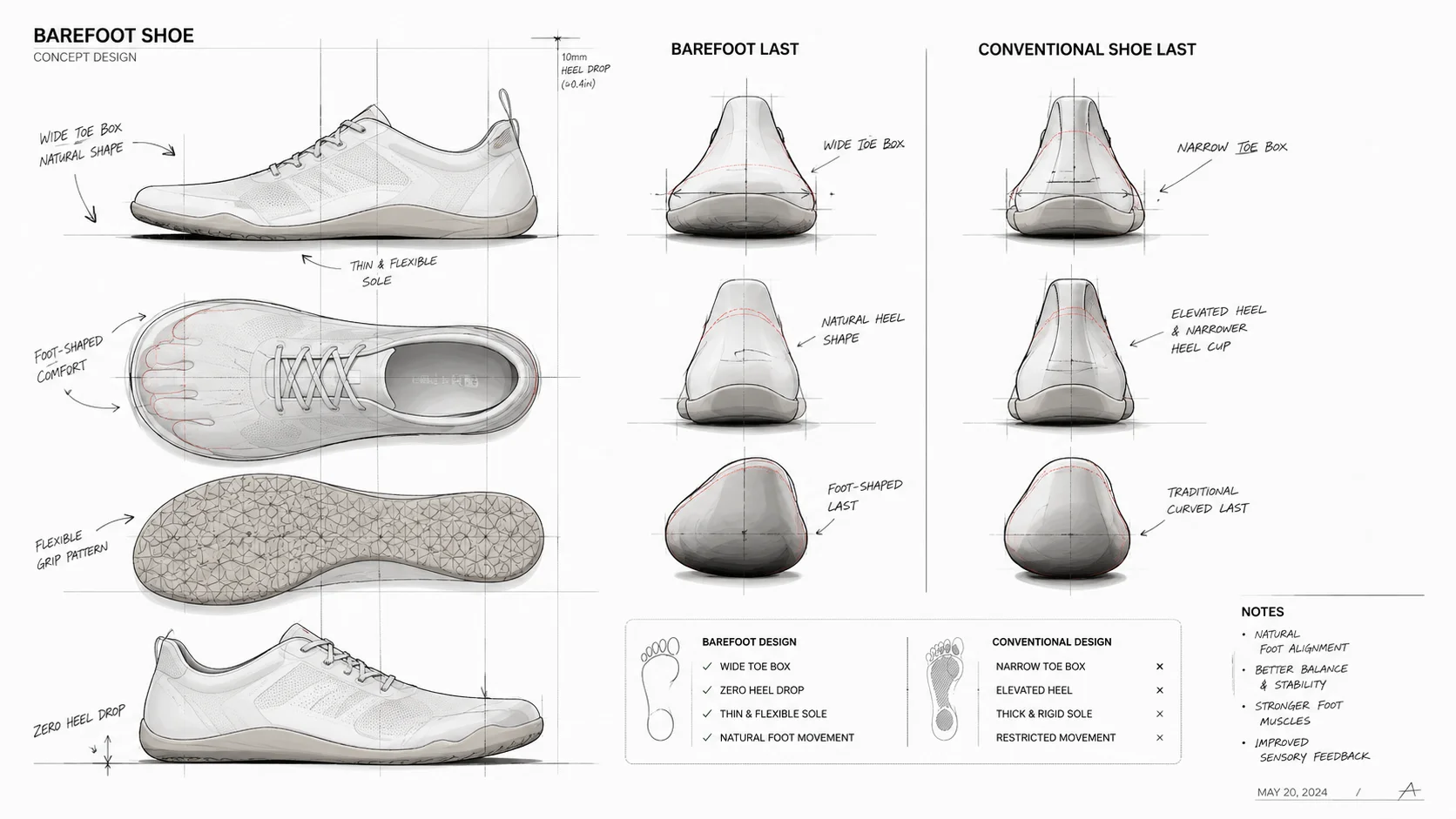
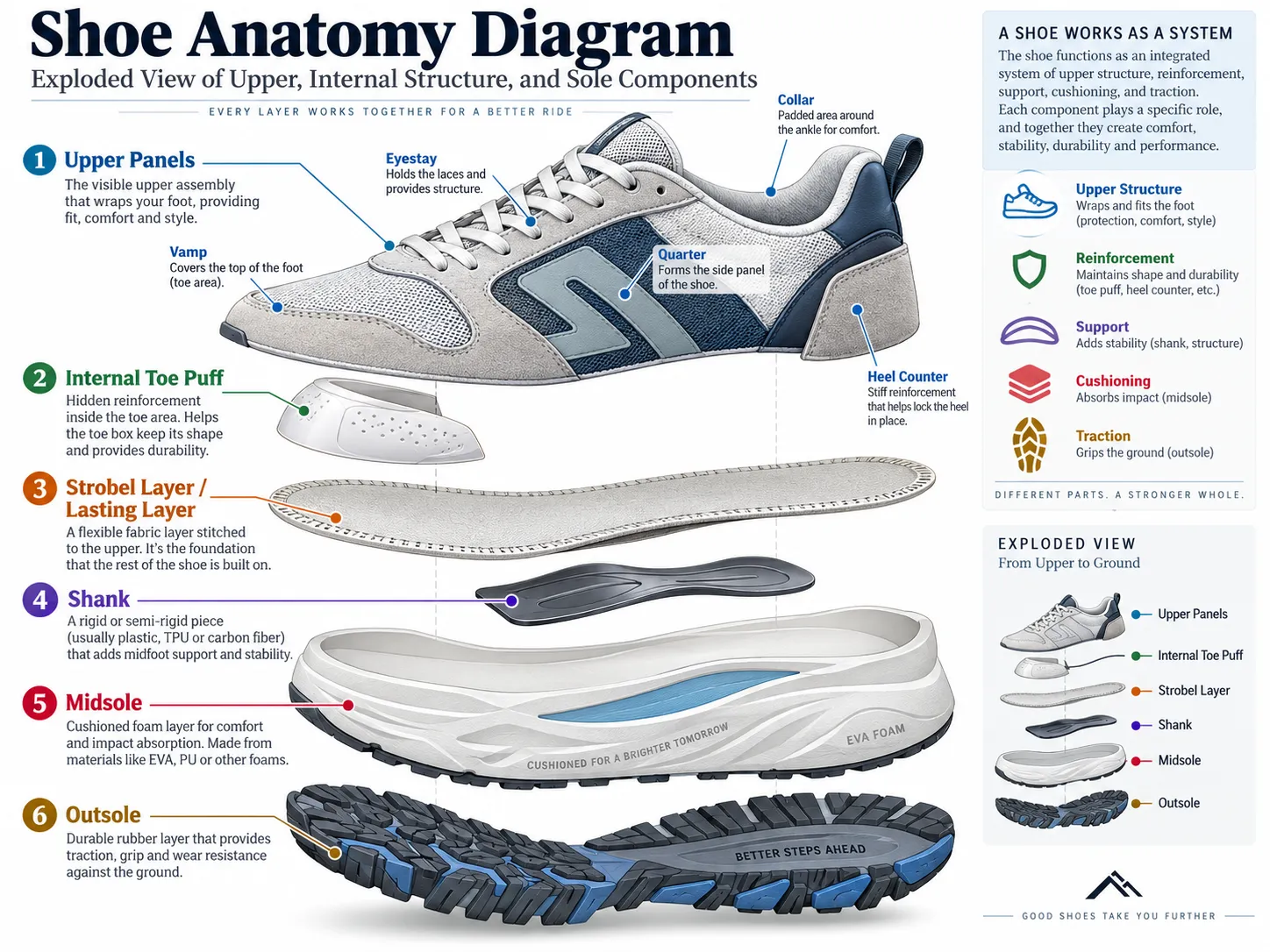
- The last — toe shape, width, instep height and heel fit come with the base style
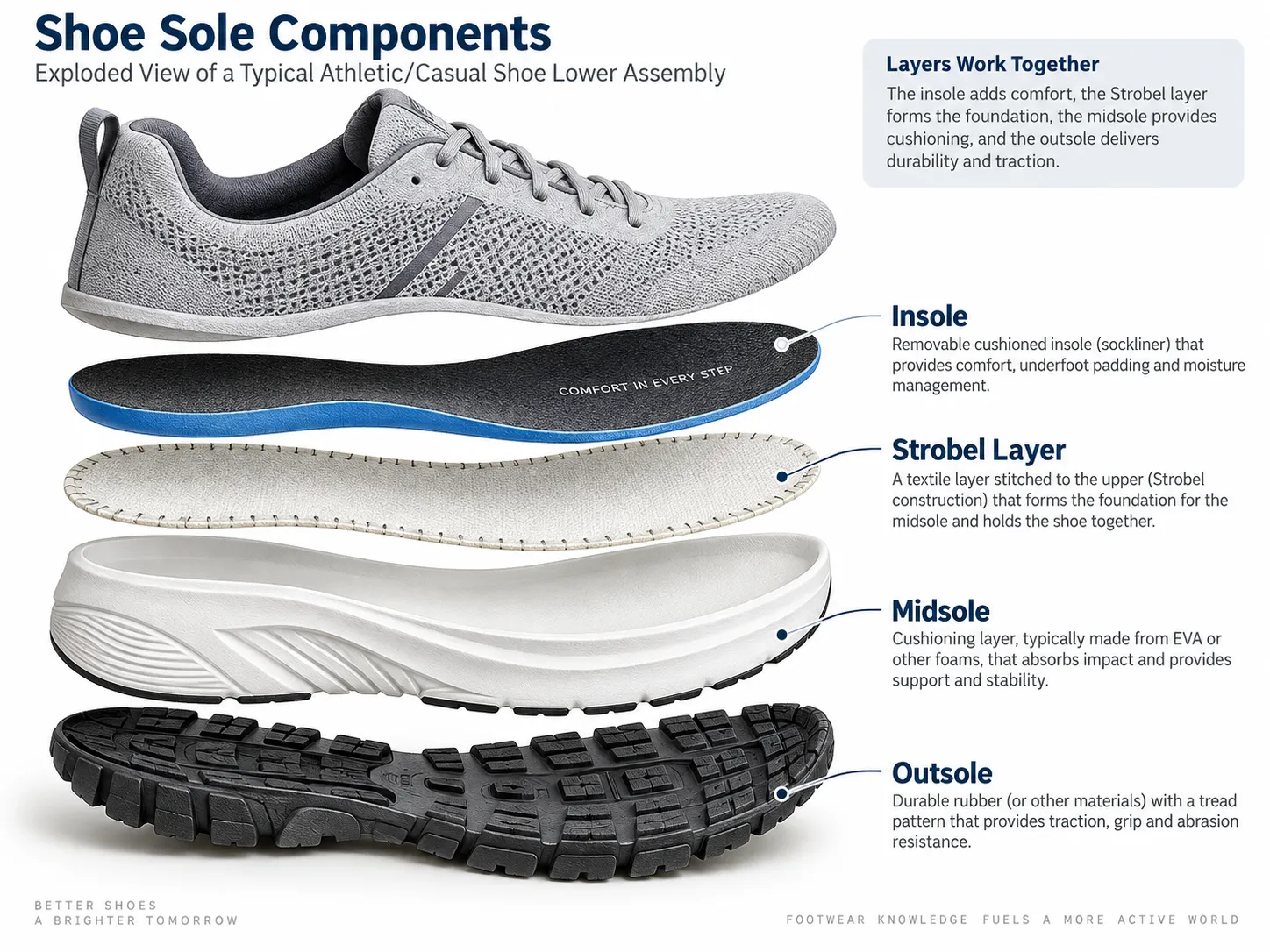
- The outsole — shape, tread pattern, sidewall height and any molded logo belong to the public mold
- Construction — a cemented base stays cemented, a vulcanized base stays vulcanized
Small pattern changes, such as moving a panel line or adding a pull tab, are sometimes possible on the existing last. Ask before sampling, because each one adds a pattern revision.
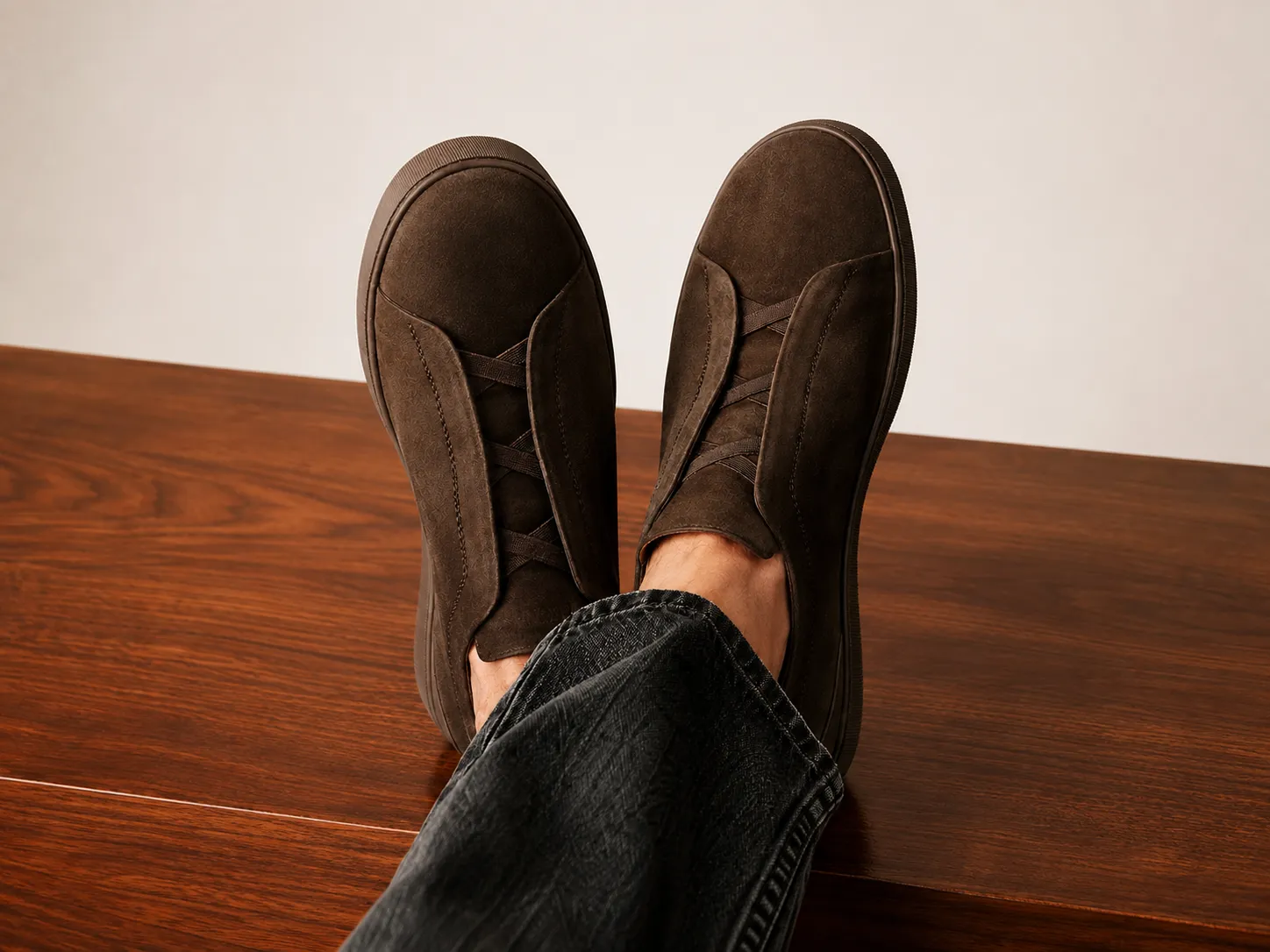
Casual styles built on our existing lasts and public outsoles — the starting point for most ODM projects.
◆When ODM Stops Being Enough
If your change list includes a different toe shape, a wider fit, a new tread or your logo molded into the sole, you have left ODM. Those changes need an adjusted last or a private outsole mold, which is the start of an OEM project. Our shoe outsole guide explains how public and private molds differ in more detail.
What Does an OEM Shoe Project Need From Your Brand?
An OEM project needs a design to start from and four decisions from you: the fit, the sole, the materials and the target price. The design can be a full tech pack, a sketch or a reference shoe. A factory development team can fill gaps in the drawings, but every gap is still a decision you will be asked to make before the first sample is cut.
◆Three Ways to Start
- A tech pack — the fastest route to an accurate first sample. Our guide to the shoe tech pack lists what each page should contain.
- A sketch or design drawing — our developers turn it into technical drawings and a bill of materials for you to approve.
- A reference shoe — useful for showing fit, construction and comfort. A legitimate factory will copy the construction you point to, not another brand’s logo or protected design.
◆The Four Decisions That Shape the Quote
- Last and size range. Which fit you want and which sizes you will sell. The last fixes toe shape, width and instep, so it is the first thing to agree (see what a shoe last is).
- Outsole. A new private mold, or an existing sole adapted to your upper.
- Materials. Named materials with thickness for each part, not just “leather” or “mesh”.
- Target price and quantity. A target FOB price and expected pairs per style let the factory choose materials that fit the budget. At SeeU Shoe the minimum is 500 pairs per style, with colors and sizes mixed.
◆How an OEM Project Runs
The order is the same for most styles: last adjustment, private mold (7–15 days at SeeU Shoe), sample rounds, a fit check on real feet, a confirmation sample signed off by your team, then bulk production, which takes 28–35 days after approval. The full sequence, with what happens at each stage, is on our shoe development page.

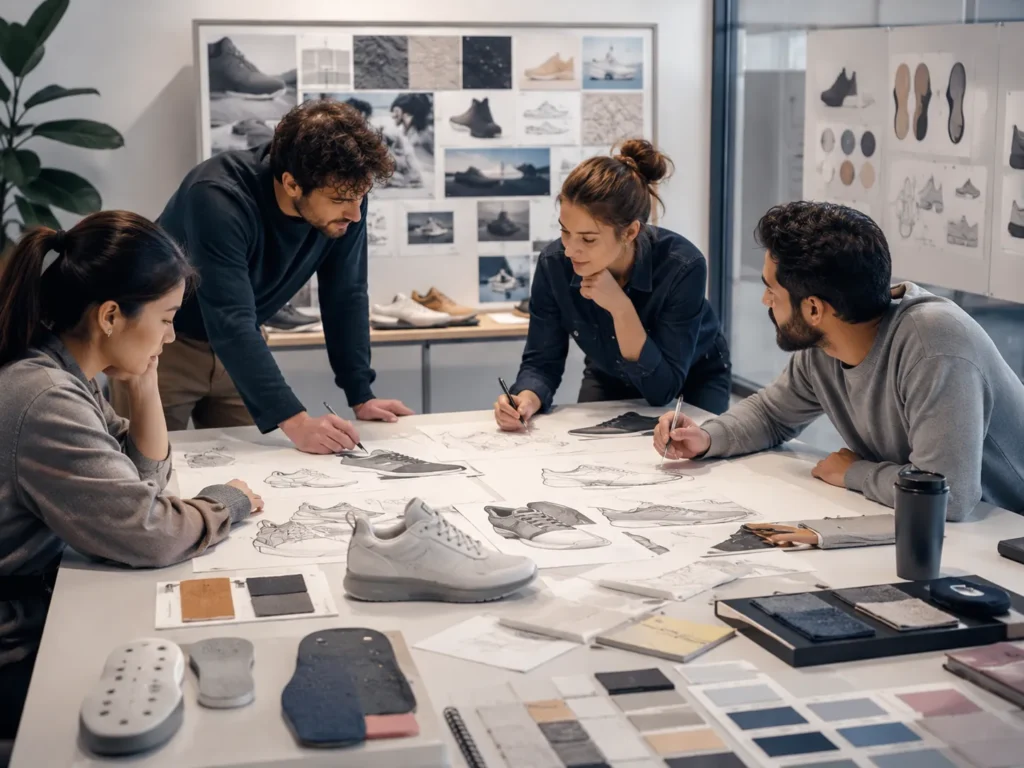
Reviewing sketches, sole options and swatches before the first OEM sample.
The Hybrid Route: Starting on ODM, Moving to Your Own Mold
The route most brands take is a hybrid rather than a strict OEM vs ODM choice. Sample and sell your first styles on an existing last and public outsole, see which ones customers reorder, then open a private mold for those styles. Tooling money goes only into shoes that have already proven they sell, and the brand still ends up owning the molds behind its best sellers.
◆Stage 1: Validate on Existing Tooling
Choose base styles from the public-mold range, customize the upper, colors and branding, and get samples in 3–7 days. Because the minimum is 500 pairs per style with colors and sizes mixed, one style can launch in several colorways across a full size run without multiplying the order.
◆Stage 2: Decide Which Style Earns a Private Mold
Three signals are worth waiting for: a style that reorders without discounting, returns that point to fit rather than taste, and competitors selling shoes on the same base sole. Any one of them is a reason to put that style on its own tooling.
◆Stage 3: Move the Winner to Your Own Tooling
Open a private outsole mold with your own tread and molded logo, and adjust the last using the fit feedback from season one. The mold belongs to your brand, and the style now looks different from anything built on the shared base.
◆What to Make Private First
If the budget covers one private part, make it the outsole. It is the most visible part of the shoe from the side and the bottom, and it is exactly what a competitor ordering the same public mold would share with you. The last comes next, once fit complaints or a new size range justify it.
Who Owns the Design, the Last and the Mold?
At SeeU Shoe, a private mold paid for by your brand belongs to your brand, and so do the design, logo and artwork you bring to the project. Public molds and the factory’s base styles stay with the factory and remain available to other customers. Ownership is where the OEM vs ODM decision has the longest-lasting effect, so whichever factory you choose, get it in writing before you pay for tooling, not after the first order ships.
We sign an NDA before reviewing unreleased designs, and we do not produce shoes with a brand’s logo, artwork or private mold for anyone else. Mold ownership covers the physical tool; protecting the look of the shoe itself is a separate step, done by registering it as an industrial design (see WIPO’s overview of industrial designs).
◆“OEM” on Sneaker Listings Is Not OEM Manufacturing
You will sometimes see “OEM” or “original factory” used in online listings for copies of well-known branded sneakers. That is a sales claim, not a manufacturing model. Real OEM production only puts a trademark on shoes the trademark owner has ordered.
Four lines to add to your purchase order
1. The outsole mold for style [style no.] is paid for by [Brand] and is the property of [Brand].
2. The factory will not produce or sell shoes using [Brand]’s mold, logo or artwork for any other customer.
3. Where the mold is stored and how long it is kept after the last order: [agreed term].
4. [Brand]’s right to collect the mold or move it to another factory: [agreed terms].
OEM, ODM, Private Label or White Label: Which Does Your Brand Need?
Settle OEM vs ODM by what your brand competes on. If it competes on price, range and speed to market, start with ODM. If it competes on a look or fit nobody else has, that style needs OEM. Most new brands should not put every style through full OEM development — spend development money on the one or two styles that carry the brand, and run the rest on existing tooling.
◆Four Terms Buyers Mix Up
- Private label — shoes made for one brand or retailer and sold only under its name. Both ODM and OEM shoes can be private label.
- White label — a generic product sold by several sellers, each adding its own name with little or no change to the product.
- OBM (original brand manufacturing) — the factory designs, makes and sells under its own brand.
- OEM and ODM — describe who owns the design, not whose name goes on the box.
◆OEM vs ODM by Brand Situation
Product ranges for each category — casual shoes, outdoor and sports shoes, slippers and medical shoes — show which base styles are available for ODM.
Two Example Projects, Two Routes
The two projects below are composite examples built from typical requests, with details simplified. They illustrate the two sides of an OEM vs ODM decision and are not individual client case studies.
◆Example A: A Retailer’s ODM Sneaker Line
A retailer wants a store-brand women’s casual sneaker. It picks two base styles from the public-mold range, switches the uppers to suede and mesh, sets three colorways per style and adds an embossed logo on the tongue and heel plus its own shoebox. The first samples arrive within a week; a second round corrects one color. The order is 1,000 pairs — 500 per style, each split across three colorways and sizes 6 to 11 — and bulk ships about 30 days after sample approval. No mold fee is paid.
◆Example B: A Start-Up That Moves From ODM to OEM
A new barefoot-shoe brand launches season one on a public-mold barefoot base with its own knit upper and branding: one style, 500 pairs, mixed colors and sizes. The style reorders twice, and customer reviews ask for a roomier toe box. For season two the brand opens a private outsole mold with its own tread and molded logo, and the last is widened at the toe. The mold takes about two weeks, two sample rounds settle the fit, and the brand now owns the tooling behind its best seller.
Writing to a Factory About Your Project
The first message decides how useful the first reply is. These two short briefs give a factory what it needs to quote either side of OEM vs ODM; swap in your own details.
ODM brief
We’d like to customize base style [no. or photo] for our brand. Changes: [upper material], [3 colorways], [logo method and position], our own box. Sizes [range]. Planned order: 500 pairs for this style, colors and sizes mixed. Target FOB: [price].
OEM brief
We have a new design: [tech pack / sketch / reference shoe attached]. We need our own outsole mold and a last adjusted for [fit note]. Materials: [list with thickness]. Sizes [range]. Planned order: [pairs] for this style. Target FOB: [price]. Please confirm mold ownership terms.
Not sure where your first style lands on OEM vs ODM? Send us the style and your planned quantity and we will tell you whether it can start on an existing base or needs its own tooling. To compare us with other suppliers first, see our guide on how to find shoe manufacturers in China, or start from our custom shoe manufacturer homepage.
OEM and ODM Questions From Shoe Buyers
◆Which is better, OEM or ODM?
Neither is better in general; the OEM vs ODM choice depends on what the style has to do. ODM is better for testing a market quickly and cheaply on proven tooling. OEM is better for a signature style whose shape, sole or fit is the reason customers buy it.
◆Is ODM cheaper than OEM for shoes?
Yes, to start. ODM uses a last and outsole mold that already exist, so there is no mold or last development to pay for and samples take 3–7 days. The per-pair price in both models is set mainly by materials, construction and quantity.
◆Can I start with ODM and switch to OEM later?
Yes, and it is the route most of our brands take. Launch on an existing base, see which styles reorder, then open a private mold for those styles. Your colorways, branding and sales history carry over to the new tooling.
◆Can a factory sell my ODM-customized style to other brands?
The base shoe, yes, because public molds are shared. Your logo, artwork and colorway files, no. At SeeU Shoe a private mold paid for by a brand belongs to that brand and is never used for another customer.
◆Do I need a tech pack for ODM?
No. For ODM, the base style number, the material and color changes, your logo file and position, the size range and the quantity are enough to sample and quote. A tech pack matters for OEM, where the factory has to build a new design.
◆What is the minimum order for OEM and ODM shoes?
At SeeU Shoe the minimum is the same for both: 500 pairs per style, with colors and sizes mixed inside that quantity. One style can therefore launch in several colorways and a full size run.