
A shoe tech pack is the specification a factory samples and quotes from. For footwear it needs five things at minimum: technical drawings from every side, a bill of materials listing each part with its material, thickness and color, the size range, the outsole and last reference, and logo and packaging details. The more complete it is, the fewer sample rounds you pay for and the easier it is to compare quotes.
This guide walks through a shoe tech pack page by page from the factory side: what each section has to say, which missing details cause the most rework, what it costs to have one drawn, where AI tools help and where they don’t, and how development works when you only have a sketch. A printable checklist is at the end.
💡Quick answer
📐What Is a Shoe Tech Pack?
A shoe tech pack is a set of drawings and tables that defines one shoe style completely enough for a factory to build it without guessing. It answers four questions: what the shoe looks like from every side, what each part is made of, what sizes it comes in, and how it is branded and packed. Factories use it to cost the shoe, order materials, cut the first sample and later to check bulk production against it.
◆Tech Pack vs. Design Sketch
A design sketch shows what the shoe should look like. A tech pack adds everything a sketch leaves open: the exact material for each panel, its thickness, the stitching, the sole unit, the measurements and the size run. Two factories given the same sketch will often make two different shoes; two factories given the same complete tech pack should make the same one.
◆How a Shoe Tech Pack Differs From an Apparel Tech Pack
Apparel tech packs are built around a flat pattern and a measurement chart. Footwear adds three things that clothing does not have:
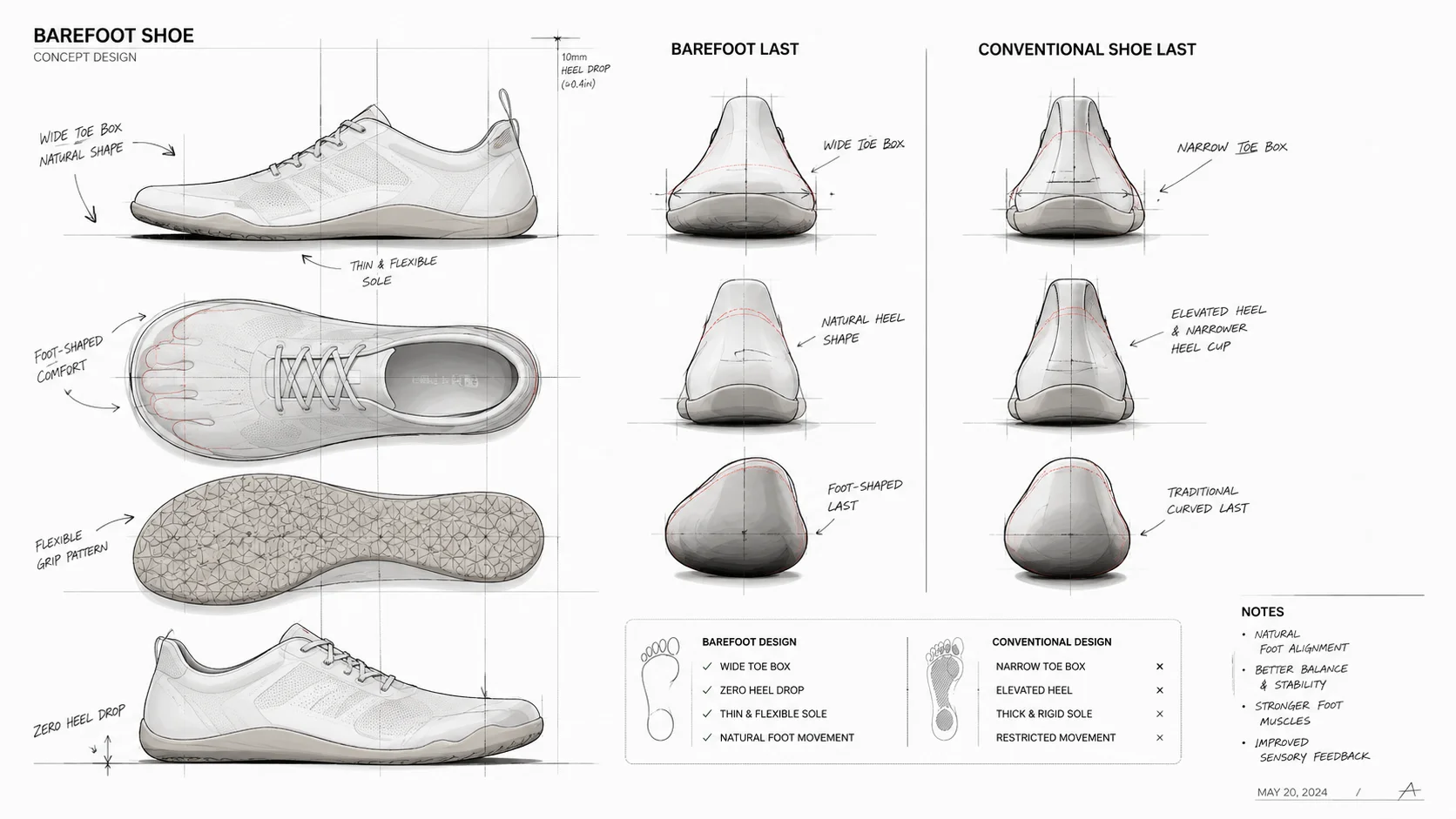
- The last — the foot-shaped form the upper is built on, which fixes toe shape, width, instep and fit (see what a shoe last is).
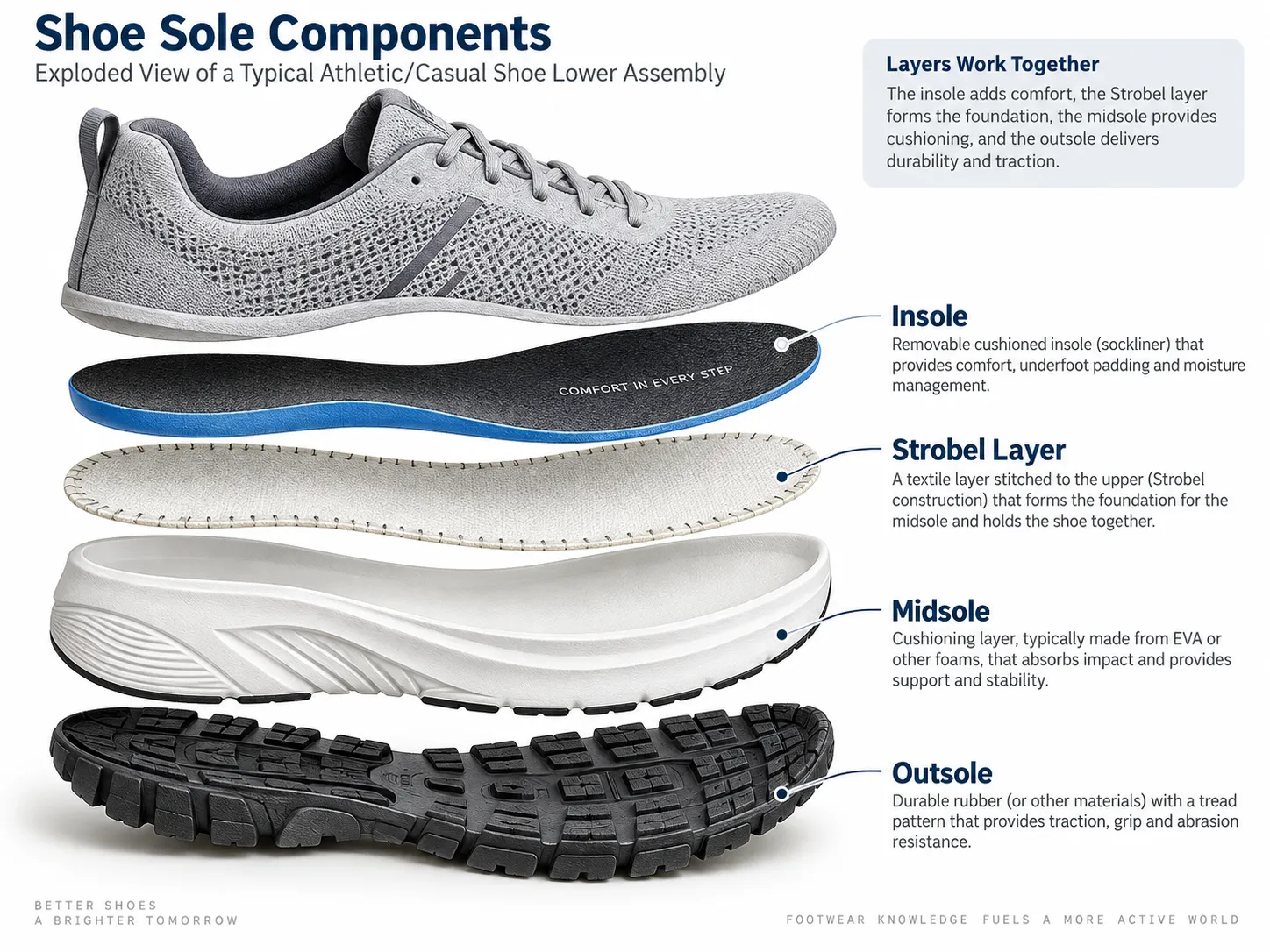
- The sole unit — usually a separate molded part with its own material, tread and tooling (see our guide to the shoe outsole).
- Size grading across a run — every size needs its own pattern and often its own sole size, so the size range affects tooling, not only labels.
◆Who Uses It at the Factory
One tech pack is read by several departments, each looking at different pages:
🗂️What Does a Shoe Tech Pack Include?
A complete shoe tech pack usually has eight sections: a cover page, technical drawings, a bill of materials, colorways, measurements and size range, outsole and last information, branding details and packaging. Techpacker’s footwear guide describes the same core — sketches, construction details, measurements, a bill of materials and a costing sheet (Techpacker). The sections below follow the order a factory reads them in.
◆1. Cover Page
The cover page identifies the style so every later email, sample and invoice refers to the same thing:
- Brand, style name and style number
- Season or launch date, category (sneaker, slipper, boot…) and gender
- Version number and date — update it every time something changes
- Target FOB price and expected order quantity per style
- Main contact on the brand side
◆2. Technical Drawings
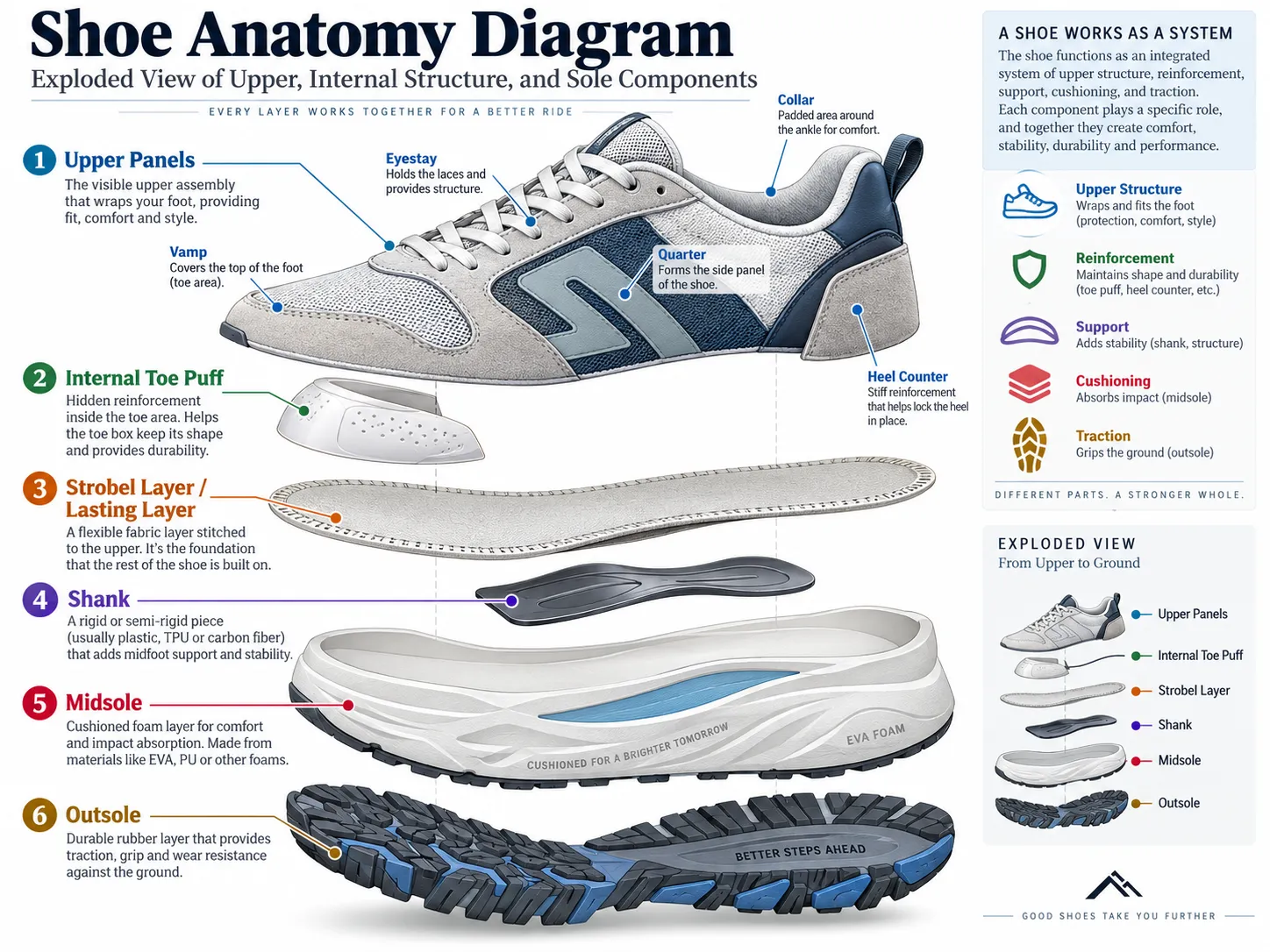
Technical drawings are flat, line-based views of the shoe, not mood images. A factory needs at least five views: lateral (outside), medial (inside), top, back/heel and bottom (outsole). Each view should call out the panels by name, the stitch lines and stitch type, and any overlays, perforations or padding. If the names of shoe parts are new to you, our guide to the parts of a shoe lists the terms factories use.
◆3. Bill of Materials (BOM)
The bill of materials is the table that drives both cost and quality. List every component on its own line:
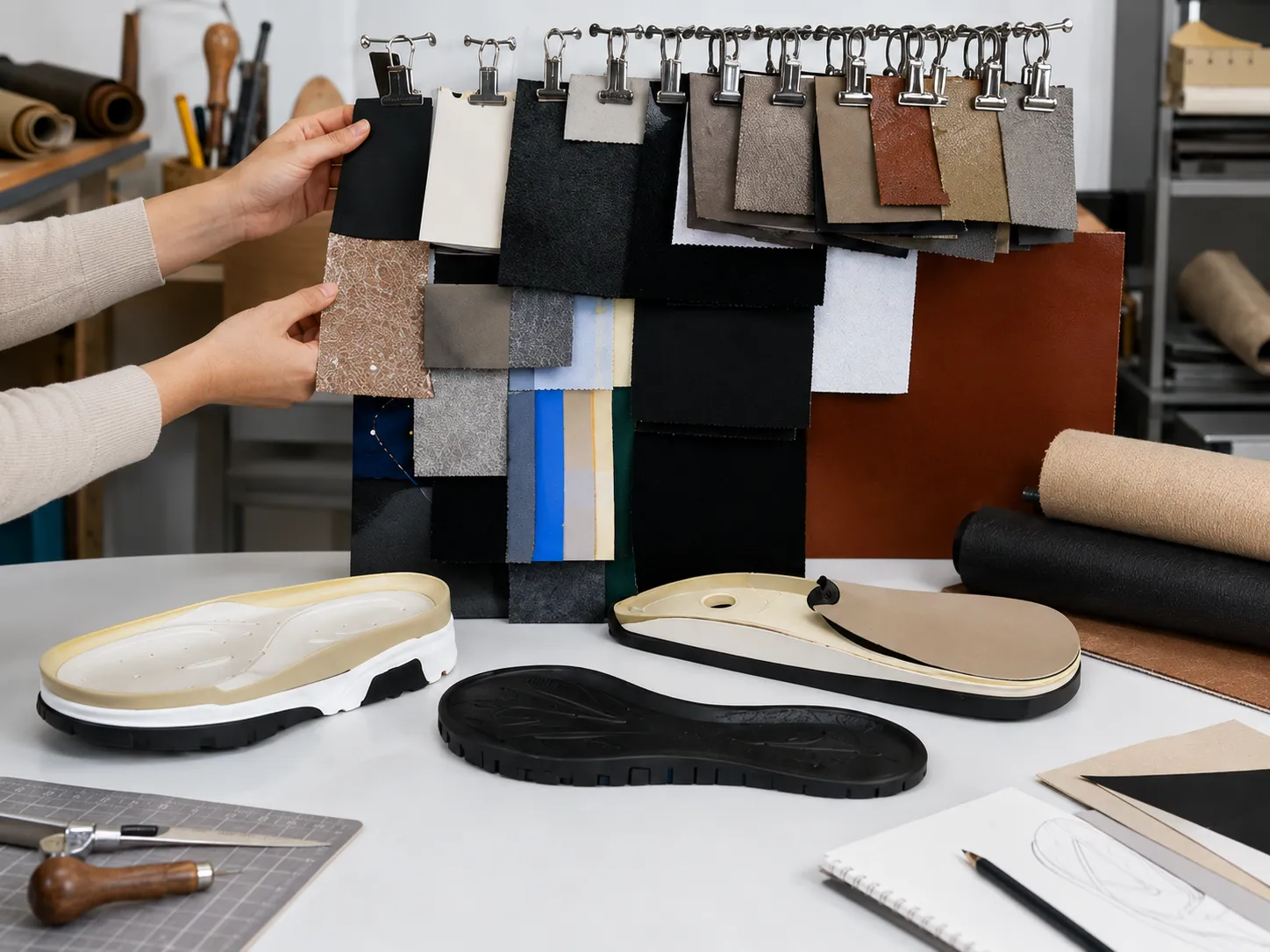
Upper swatches and sole units in our development room — each line of a BOM points to one of these.
◆4. Colorways
For each colorway, give the color of every component in the BOM, not only the main upper. Use Pantone references or physical swatches. Screen colors are not a reliable standard: the same hex code looks different on suede, mesh and rubber.
◆5. Measurements and Size Range
Give the sample size, the full size range and the size system (US, EU or UK). Add the measurements that define the look, such as collar height at the heel, heel height, platform height and the position of key overlays. For sizing, the last does most of the work; the tech pack only needs to say which last or which fit reference to use.
◆6. Outsole and Last Information
State whether the shoe should use an existing sole and last or a new one. This decision changes cost and timing more than any other line in the tech pack, because a new outsole means a mold for every size. If you have a reference sole, add photos or a part number; if you need a new one, add a bottom-view drawing with tread pattern and side-wall profile.
◆7. Logo and Branding Details
For every logo, give its position on the shoe, its size in millimeters, its method (printing, embroidery, embossing, debossing, woven label, TPU or rubber patch) and its colors. Attach vector artwork files. Include insole printing and tongue or heel labels here too.
◆8. Packaging and Labeling
Specify the shoe box (size, board, print), tissue or inner bags, hangtags, size labels, barcode stickers and carton marks. Destination-market labels belong here as well, such as country-of-origin marking and any labels required for children’s shoes.
🏭Which Details Matter Most to a Shoe Factory?
From a factory’s side, five gaps cause most of the extra sample rounds and most of the “why is this quote so different?” conversations: material thickness, outsole reference, target price and quantity, size range and logo dimensions. None of them is hard to fill in; they are simply easy to forget when the design is clear in the brand’s head.
◆Material Thickness and Grade
What goes wrong: “Grey suede” can be quoted in several grades and thicknesses. The sample arrives softer or stiffer than expected, and the price is not comparable with another factory’s quote.
What to write: material type, grade or reference, and a thickness range in millimeters for each panel — for example “suede, 1.4–1.6 mm”.
◆Outsole Reference
What goes wrong: without a sole reference, the factory picks the closest sole it already has. If the brand expected a different profile, the next round has to start again.
What to write: “use existing sole close to this photo” or “new sole” plus a bottom view, side-wall height and material.
◆Target Price and Order Quantity
What goes wrong: the factory builds the sample with materials it thinks suit the design, and the first quote lands far above the brand’s retail plan.
What to write: a target FOB price and the quantity per style you expect for the first order. Knowing both lets the developer choose materials that fit. At SeeU Shoe, bulk orders start at 500 pairs per style, with colors and sizes mixed.
◆Size Range
What goes wrong: a style approved in one size turns out to need extra sole sizes or pattern work across the full run, which changes tooling cost after the quote.
What to write: the size system and full size range from the start, even if only one size is sampled.
◆Logo Dimensions
What goes wrong: logos are drawn “about here” and come back too large, too small or in a method that does not suit the material — embroidery on thin mesh, for example.
What to write: width and height in millimeters, distance from a fixed edge, method and color, plus vector files.
🏭From our development room
When a brief is complete, our samples are built in 3–7 days per round on existing lasts and sole molds. Most extra rounds we see are not caused by difficult designs; they are caused by one of the five gaps above being filled in after the first sample instead of before it.
👟Shoe Tech Pack Example: One Sneaker, Page by Page
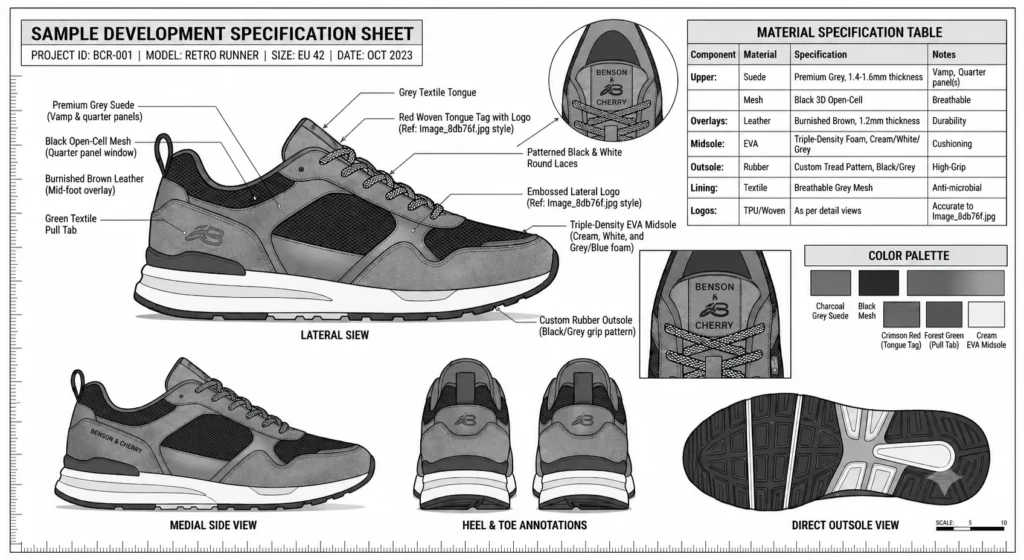
The specification sheet below is for a retro runner sample: one sheet carries five drawn views, a material specification table and a color palette. It shows what a well-organized tech pack page looks like — and, just as useful, which sections still have to live on other pages before bulk production.
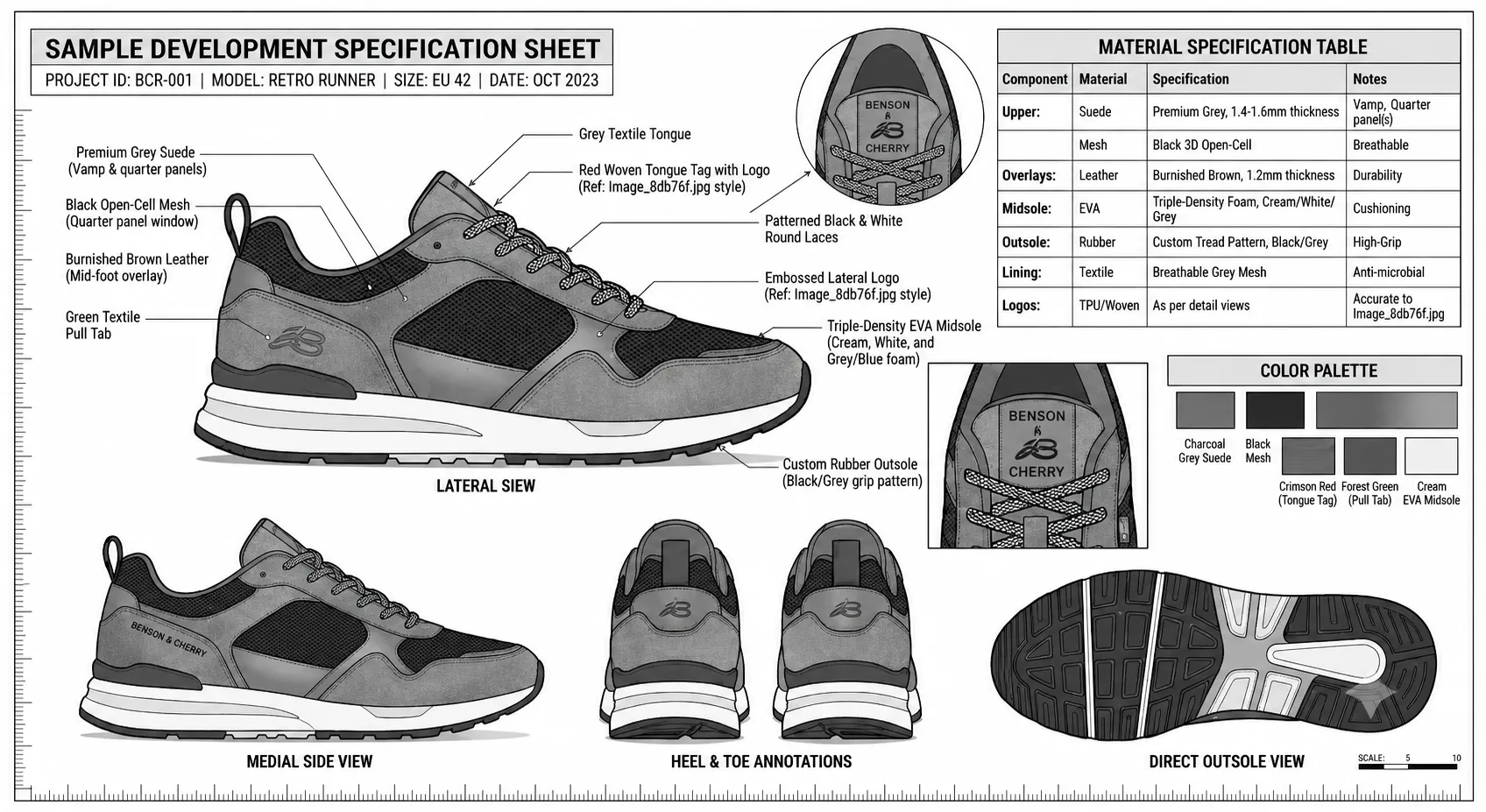
A sample development specification sheet: views, material table and color palette on one page.
◆Header: Project, Model, Sample Size and Date
The header gives a project ID, model name, sample size (EU 42) and date. That is enough for everyone to refer to the same version. A full cover page would add the version number, target price and quantity.
◆Drawn Views With Callouts
The sheet shows the lateral view, medial view, heel and toe views, a tongue detail and a direct outsole view. Callouts name each material where it appears: grey suede on the vamp and quarters, black open-cell mesh in the quarter window, burnished brown leather on the mid-foot overlay, a textile tongue with a woven tongue tag, a textile pull tab, round patterned laces, a triple-density EVA midsole and a rubber outsole.
◆Material Specification Table
The table lists component, material, specification and notes. Thickness is given where it matters most — suede at 1.4–1.6 mm and the leather overlay at 1.2 mm — and the midsole is specified as triple-density EVA with its three colors. This is the part of the page purchasing and costing will read first.
◆Color Palette
Each color is tied to a component: charcoal grey suede, black mesh, crimson red for the tongue tag, forest green for the pull tab and cream for the EVA midsole. Linking colors to parts is what prevents a “right colors, wrong places” sample.
◆What Still Belongs on Other Pages
One sheet is enough to start a sample, not to run bulk. Before production, the same style still needs a size range and grading notes, logo dimensions in millimeters, packaging and label details, and the approved version number. In our process these are added during development and handed to production with the sealed approval sample.
💰How Much Does a Shoe Tech Pack Cost?
A shoe tech pack costs whatever the time of the person drawing it costs, so the price depends on who draws it and how much of the work you have already done. There are three routes: draw it yourself, hire a freelance footwear designer, or have the factory’s development team prepare it.
◆Drawing It Yourself
Doing it yourself costs time rather than money. Free and paid templates exist, and vector tools are enough for flat drawings. The risk is not the drawing; it is the specification — knowing which materials, thicknesses and sole options exist. Expect the factory to ask questions about anything you leave open.
◆Hiring a Freelance Footwear Designer
Freelance marketplaces list shoe tech pack services from very low starting prices; Fiverr’s shoe tech pack category, for example, advertises gigs starting at about US$15 (Fiverr, October 2026). Starting prices usually cover a basic drawing; a full pack with a bill of materials, colorways and size details costs more. Check that the designer has footwear experience, not only apparel.
◆Letting the Factory’s Development Team Draw It
A factory development team draws the tech pack from your sketch, photos or reference shoe, using the lasts, soles and materials it actually has. At SeeU Shoe this is a paid development service: we quote the fee per style before any work starts, so you know the cost before you commit. The advantage is that the specification is written by the people who will build the shoe.
🤖Can You Make a Shoe Tech Pack With AI?
AI tools can help with parts of a tech pack — concept images, a first draft of the material list, wording of construction notes — but they cannot supply the details a factory builds from: last measurements, real material thicknesses, the soles available to you, or logo sizes that fit the actual panel. Treat AI output as a draft that a footwear developer completes.
◆What AI Tools Do Well
- Turning a rough idea into concept images to share with a designer or factory
- Drafting a bill-of-materials table structure and component list to fill in
- Translating and tidying construction notes for the factory
◆What Still Needs a Footwear Developer
- Choosing a last and confirming fit
- Specifying real, purchasable materials with thicknesses
- Matching the design to an existing sole or defining a new one
- Drawing accurate flat views that pattern makers can work from
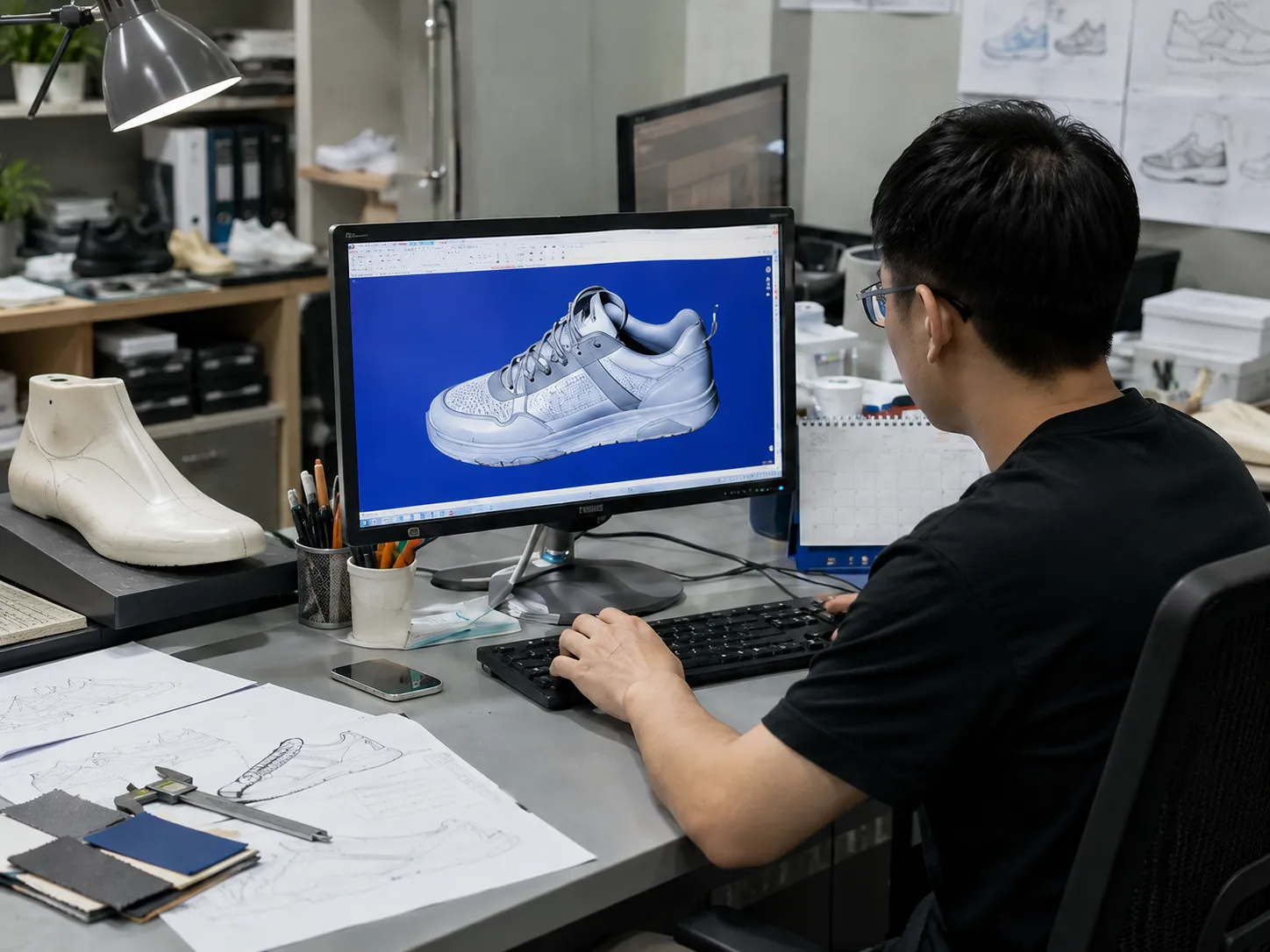
Digital tools speed up drawing, but the last on the desk still decides the fit.
✏️No Tech Pack? How Factories Work From a Sketch or Reference Shoe
You do not need a tech pack to start development. A reference photo, sketch or sample shoe, plus your target price, size range and logo, is enough for a factory development team to draw the technical views and material table for your approval. The trade-off is time: details agreed during development instead of before it can add a sample round. If you are still deciding between building on an existing style and developing your own design, see OEM vs ODM shoe manufacturing.
◆What to Send Instead
- Reference photos or a physical reference shoe, with notes on what to keep and what to change
- Target FOB price and expected quantity per style
- Size range and target market
- Logo files and where you want the logo
- Any must-have materials or features
◆What the Development Team Prepares for Your Approval
From that brief our developers prepare the technical drawings and material table, select the closest existing last and sole, and propose a first-sample plan. You approve the specification before the first sample is made. Samples on existing lasts and sole molds start from US$28 per pair and take 3–7 days per round; a private outsole mold, if the design needs one, starts from US$700 and takes 7–15 days. The full process is on our shoe development and prototyping page.
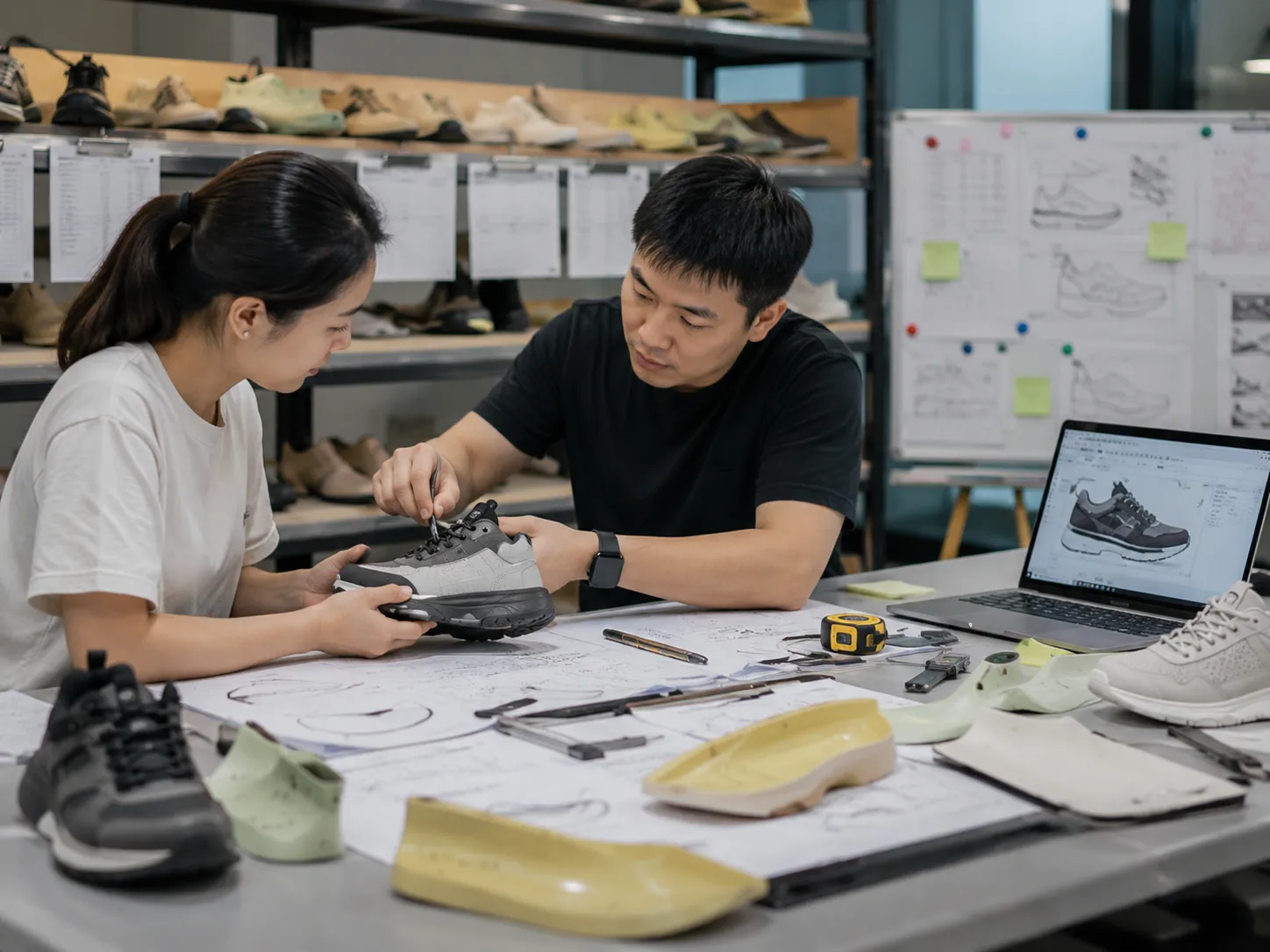
Reviewing a trial shoe against the specification with a client.
◆When It’s Worth Investing in a Full Tech Pack
- You want quotes from several factories and need them to price the same shoe
- You are launching a range of styles that share materials and components
- You expect repeat orders and need a fixed reference for every production run
For a first style, starting from a sketch and letting the developer build the tech pack is often faster overall. For a range, a full tech pack per style pays for itself in fewer misunderstandings. If you are budgeting a first collection, our guide to how much it costs to make a shoe covers samples, molds and per-pair pricing.
✅Free Shoe Tech Pack Checklist
Use this checklist before you send a tech pack to a factory. Each line matches a section above; anything left unticked is something the factory will have to ask about or guess.
Not sure how to fill in a line? Send what you have — a photo and a quantity are enough to start — through our contact page, and our developers will tell you what is missing.
❓Shoe Tech Pack FAQ
◆What is the difference between a tech pack and a spec sheet?
A spec sheet is usually a single page of measurements and materials. A tech pack is the full set — drawings, bill of materials, colorways, sizes, branding and packaging — of which the spec sheet is one part.
◆Will a factory share my tech pack with other brands?
It should not, and you can put that in writing. SeeU Shoe signs your NDA before you send designs, and private molds paid for by your brand are used only for your orders.
◆Do I need a new sample if I change the tech pack?
Usually yes if the change affects materials, construction, the sole or fit. Color-only changes on approved materials can sometimes be confirmed with swatches instead. Always update the version number so the factory builds from the latest file.
◆What software is used to make a shoe tech pack?
Flat drawings are commonly made in vector software, and tables in a spreadsheet or a tech pack platform. The file format matters less than completeness: a clear PDF with vector logo files attached is accepted by almost every factory.
◆Do factories need 3D files for a shoe tech pack?
No. 3D renders help communicate a design, but factories build from flat technical drawings, a bill of materials and the last. A render without those still leaves the specification open.
◆Can a factory make my shoe without a tech pack?
Yes. At SeeU Shoe, reference photos, your target price, size range and logo are enough to start; our development team prepares the technical drawing and material specification for your approval before sampling, for a development fee quoted per style.