
Medical & Rehabilitation Shoes Manufacturer
We manufacture custom medical and rehabilitation shoes for sensitive, swollen and recovering feet. From wide and extra-depth lasts to adjustable closures, soft low-seam interiors, removable footbeds and stable outsoles, we help healthcare, rehabilitation and footwear brands develop accommodating, production-ready footwear collections.
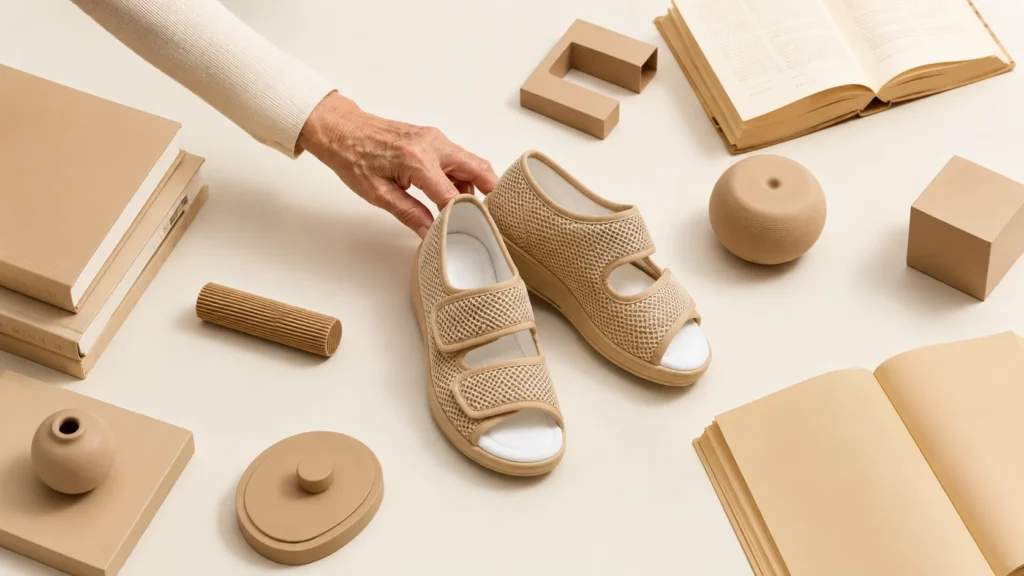
Wide & Extra-Depth Fits
Wide Toe Boxes and Additional Internal Volume for Swelling, Bandages and Orthotic Insoles
Adjustable Easy-Entry Designs
Wide Openings, Hook-and-Loop Closures and Flexible Fit Adjustment for Easier On and Off
Soft, Low-Seam Interiors
Padded Collars, Soft Linings and Reduced Internal Seams for Sensitive Feet
Removable Footbeds & Stable Soles
Orthotic-Ready Insoles, Cushioned Support and Slip-Resistant Outsoles for Everyday Stability
The Medical Footwear Fit Challenge — Why Extra Room Alone Does Not Create a Better Fit
Medical and rehabilitation shoes may look similar to ordinary walking shoes, but their fit requirements can be very different. Wearers may need additional internal volume, wider openings, adjustable closures and softer interiors to accommodate swelling, bandages, sensitive areas or orthotic inserts.
Simply enlarging a standard shoe is not enough. Excessive volume can allow the foot to slide, while insufficient instep space, a narrow opening or poorly positioned seams may create unwanted pressure and friction. The shoe must provide more usable room without losing heel security and walking stability.
Wide and extra-depth footwear therefore requires a coordinated fit system. Toe-box shape, forefoot width, instep volume, opening depth, closure range, removable footbed thickness, lining softness and outsole stability must be reviewed together.
Before sampling, we evaluate the intended wearer, fit-adjustment needs, orthotic or bandage allowance, entry method, internal seam placement and target price position. The goal is to develop accommodating footwear that is easier to put on, provides usable internal space and remains stable during everyday wear.
The Product Developer’s Note — Extra Depth Must Be Usable, Not Just Measured
An extra-depth last does not automatically create usable internal space. A thick footbed, heavily padded tongue or narrow opening can reduce the room available for swelling, bandages or orthotic inserts.
We coordinate last depth, removable footbed thickness, tongue construction, closure range and heel geometry as one fit system. More volume must be added where it is needed without allowing excessive foot movement.
Before approving a sample, we review entry width, adjustment range, toe clearance, instep pressure, heel hold and the space available after the original footbed is removed. This helps create a more accommodating fit while maintaining everyday stability.
Our Medical & Rehabilitation Footwear Range — Fits, Features & Applications
Our medical and rehabilitation footwear range includes wide and extra-depth shoes, adjustable recovery footwear, swollen-foot shoes, orthotic-compatible walking shoes and easy-entry rehabilitation styles. Each collection is developed around different combinations of internal volume, opening width, closure adjustment, lining softness, removable footbeds and outsole stability.
Explore the collections below to find a suitable starting point for your brand, or send us your design, tech pack or reference sample for custom ODM development. We can adjust the fit, depth, entry structure, materials, cushioning, outsole and branding according to the intended wearer, rehabilitation setting and target price position.
medical footwear
Designed for sensitive feet, recovery needs, and everyday comfort, our medical footwear features a roomy fit, wide opening, and adjustable hook-and-loop closures. These practical designs make the shoes easier to put on and allow the fit to be adjusted for different foot shapes or temporary swelling.
Breathable uppers help improve airflow, while soft linings and cushioned footbeds provide gentle comfort with reduced pressure. Lightweight, slip-resistant outsoles support stable movement, making these shoes suitable for home recovery, rehabilitation, senior care, and everyday indoor or light outdoor wear.
💡 Not Sure Which Product Direction Fits Your Market?
Our development team can help compare usage scenarios, target consumers, fit requirements, cushioning preferences, material options and price positioning before sampling begins.
Discuss Your Collection Plan →Medical Footwear Collection Planning Guide — Choose the Right Product Direction
Different wearers require different combinations of internal volume, easy-entry structure, closure adjustment, forefoot protection, lining softness and outsole stability. Use this guide to identify the most suitable medical footwear direction for your target consumer, rehabilitation setting and price position before sample development begins.
| Target Wearer / Use Scenario | Fit & Entry Direction | Comfort / Functional Priority | Recommended Construction | Recommended Product Direction |
|---|---|---|---|---|
| Swollen feet, post-operative dressing changes and home recovery | Open forefoot with extra adjustment range and easy foot access | Pressure relief, dressing accommodation and convenient on-off wear | Open-toe upper, double hook-and-loop straps, soft lining and stable outsole | Adjustable Open-Toe Recovery Sandals |
| Sensitive feet, post-operative wear and forefoot protection | Extra-depth fit with a wide opening and secure closed-toe coverage | Easy entry, soft protection and room for swelling or bandages | Wide-open upper, hook-and-loop flap closure, soft upper and cushioned outsole | Extra-Depth Post-Operative Shoes |
| Everyday recovery wear and greater fit adjustment | Closed-toe fit with adjustable instep hold and fuller internal volume | Secure fit, pressure reduction and comfortable daily walking | Closed upper, adjustable strap or buckle, soft lining and stable walking outsole | Adjustable Closed-Toe Recovery Shoes |
| Swollen feet and easy-entry daily medical wear | Wide entry opening with simple forefoot adjustment and secure upper coverage | Easy on-off, extra room and lightweight everyday comfort | Single-strap closure, breathable upper, extra-depth forefoot and lightweight outsole | Easy-Entry Swollen-Foot Shoes |
| Sensitive indoor wear and rehabilitation home use | Soft closed-toe fit with gentle upper hold and comfortable instep adjustment | Warmth, reduced friction and everyday step-in comfort | Soft upper, single hook-and-loop strap, cushioned footbed and flexible outsole | Soft-Lined Medical House Shoes |
Custom Medical & Rehabilitation Footwear Options
We customize medical and rehabilitation footwear around the intended wearer, fit-adjustment needs, swelling or bandage allowance, orthotic compatibility and everyday stability.
Each option is reviewed as part of a complete accommodating fit system—including the last, internal volume, opening structure, closure range, lining, removable footbed and outsole—before sample development begins.
Last, Fit & Internal Volume
Develop the fit around toe room, forefoot width, instep depth and usable internal volume.
Options may include wide and extra-wide lasts, extra-depth constructions and additional space for swelling, bandages or orthotic inserts.
We balance increased room with secure heel positioning to reduce excessive foot movement during everyday wear.
Adjustable Entry & Closure Systems
Configure the opening and closure system for easier entry, flexible adjustment and secure foot retention.
Available directions may include wide-opening uppers, hook-and-loop straps, double-strap closures, adjustable flaps and open-toe recovery constructions.
Closure range and strap placement are reviewed to accommodate changing foot volume without creating concentrated pressure.
Upper, Lining & Low-Seam Interior
Select upper and lining materials according to softness, breathability, flexibility and sensitivity requirements.
Options may include breathable mesh, soft textile, felt, microfiber, padded collars and reduced internal seam constructions.
Material edges, seam placement, padding thickness and reinforcement areas are reviewed to reduce unnecessary internal pressure and friction.
Removable Footbeds, Stable Soles & Branding
Develop the underfoot system around cushioning, removable depth, orthotic compatibility and everyday walking stability.
Options may include removable footbeds, multi-layer cushioning, stable heel platforms and lightweight EVA, TPR or rubber outsoles with slip-resistant tread designs.
Colors, logos, labels, custom insoles and retail packaging can also be developed for private-label medical footwear collections.
Why Medical & Rehabilitation Footwear Brands Choose SeeU Shoe
Your Brand Needs More Than a Factory That Can Make a Wider Shoe
Many factories can enlarge a standard shoe or add an adjustable strap. The more difficult task is creating usable internal space, easier entry and flexible adjustment without allowing the foot to move excessively inside the shoe.
SeeU Shoe develops wide and extra-depth medical footwear, adjustable recovery shoes, swollen-foot styles, orthotic-compatible walking shoes and soft-lined rehabilitation footwear. Each product direction requires a different balance of toe room, instep depth, opening width, closure range, lining softness, removable depth and outsole stability.
Before sampling, we review the intended wearer, swelling or bandage allowance, entry method, internal seam placement, footbed requirements, heel security, materials and target cost as one complete accommodating fit system. This creates a clearer path from product concept and fit evaluation to stable bulk production.
We do not simply make a standard shoe wider. We help turn your medical footwear concept into an accommodating product specification that can be sampled, evaluated, manufactured and developed into a consistent collection.
What Makes SeeU Shoe Different?
We Develop Around the Intended Wearer
We begin by understanding who the footwear is for, how it will be put on and which accommodation requirements matter most. Swelling, bandages, sensitive areas, reduced mobility and orthotic inserts may require different combinations of internal volume, entry width, adjustment range, lining softness and walking stability. This allows us to recommend a suitable construction instead of simply copying the appearance of a reference shoe.
We Engineer Usable Space and Adjustable Fit
Extra width or depth is only useful when the space remains available after the lining, tongue and footbed are added. We coordinate toe-box shape, instep depth, opening width, closure range, removable footbed thickness and heel geometry as one fit system. This helps provide additional room for swelling, bandages or orthotic inserts while maintaining secure foot retention.
We Develop for Consistent Bulk Production
An approved sample must also be practical to reproduce consistently. During development, we consider material availability, lining thickness, closure placement, footbed density, outsole bonding, target cost and quality-control points. This creates a clearer transition from sample approval to bulk production and helps reduce avoidable differences in fit, adjustment range, cushioning, shape and workmanship.
Frequently Asked Questions About Custom Medical & Rehabilitation Footwear
Answers to common questions about custom medical and rehabilitation footwear, including wide and extra-depth fits, adjustable closures, soft interiors, removable footbeds, orthotic compatibility, tooling, sampling, MOQ and bulk production.
1. What types of medical and rehabilitation footwear can you manufacture?
We manufacture custom medical and rehabilitation footwear for healthcare, recovery and comfort-footwear brands.
Available product directions may include adjustable open-toe recovery sandals, extra-depth post-operative shoes, closed-toe recovery shoes, swollen-foot shoes, orthotic-compatible walking shoes and soft-lined medical house shoes.
Each style can be adjusted according to the intended wearer, fit requirements, entry method, materials and target price position.
2. Can your footwear accommodate swelling, bandages or orthotic inserts?
Yes. Depending on the design, we can develop wide and extra-wide fits, extra-depth constructions, wider openings and additional internal volume for swelling, bandages or orthotic inserts.
The toe box, instep depth, closure range, removable footbed thickness and heel geometry are reviewed together so that the additional space remains usable without creating excessive foot movement.
3. Can you develop adjustable and easy-entry footwear?
Yes. Available options may include wide-opening uppers, single or double hook-and-loop straps, adjustable flaps, open-toe constructions and extended closure ranges.
The opening and closure system can be developed for easier on-and-off wear while maintaining sufficient foot retention and everyday stability.
4. Can you manufacture both open-toe and closed-toe recovery shoes?
Yes. Open-toe recovery footwear can provide easier access and greater forefoot adjustment, while closed-toe styles provide additional coverage and protection.
The suitable direction depends on the intended wearing environment, required adjustment range, swelling or bandage allowance and the level of forefoot coverage required by the customer.
5. What upper and lining materials are available?
Available materials may include breathable mesh, soft textile, felt, microfiber, flexible synthetic materials and mixed-material constructions.
Lining options can be selected according to softness, breathability, flexibility and sensitivity requirements. We also review material edges, seam placement, padding thickness and reinforcement areas to reduce unnecessary internal pressure and friction.
6. Can you provide removable footbeds and orthotic-compatible constructions?
Yes. Medical footwear can be developed with removable footbeds, additional removable depth, multi-layer cushioning and sufficient internal space for compatible orthotic inserts.
Footbed thickness, cushioning density, heel position and the remaining internal volume after footbed removal are reviewed during sample development.
7. What outsole options are available for medical footwear?
Available outsole options may include lightweight TPR constructions with different levels of flexibility, cushioning and surface grip.
For everyday medical and rehabilitation footwear, we review outsole width, heel stability, flex position, weight and slip-resistant tread direction according to the intended wearing environment.
8. Can you develop medical footwear from a concept, tech pack or reference sample?
Yes. You may provide a design drawing, tech pack, reference sample, product image or early product concept.
Before sampling, we review the intended wearer, fit and adjustment requirements, swelling or bandage allowance, entry structure, materials, lining, footbed, outsole, size range, estimated quantity and target price.
9. What are the MOQ and development lead times?
The minimum order quantity is 500 pairs per style and color. Sizes can be mixed and matched.
Initial sample development: approximately 7-15 days
Bulk production: approximately 28–35 days after approval
10. How do you control bulk consistency, and what is required for a quotation?
Before bulk production, we confirm the approved last, upper pattern, materials, lining thickness, closure placement, footbed specification, outsole, colors, branding and packaging requirements.
Production inspections focus on internal volume, opening width, adjustment range, left-right symmetry, lining, cushioning feel, bonding, stitching and overall workmanship.
To prepare a quotation, please provide reference images or a tech pack, product type, size range, estimated quantity, materials, closure system, footbed and outsole requirements, branding, packaging and destination country.